Top 5 Historic Mansion Wedding Venues in Maryland: An Entertainer’s Insider Guide

The door weighs more than your amp rack. That’s always the first thing I notice at a Maryland mansion wedding — the sheer physical weight of the entrance. Solid oak or iron-studded hardwood, hung on hinges that were forged before anyone alive today was born. You lean into it with your shoulder, roll the gear cart across a threshold worn smooth by two centuries of footsteps, and then you look up.
The ceiling is higher than it has any right to be. Crown molding so detailed it looks like it was carved by someone who had nothing but time and pride. Plaster medallions. Original hardwood floors that creak in specific places, which you learn fast because you’re going to be running cables across them in three hours. And the light — in these old rooms, the light comes through tall, narrow windows at angles that modern architects don’t bother with anymore, casting long amber rectangles across the floor that shift as the afternoon moves.
I’ve set up in historic mansion wedding venues in Maryland from Baltimore’s Mount Vernon neighborhood to the foothills of the Catoctin Mountains, and every single one of these buildings has a personality. Not a “vibe” — a personality. The walls have absorbed a century of conversations, celebrations, arguments, music. You feel it. And when you start a sound check in a room like that, the space talks back to you in ways that a hotel ballroom never will.
These five Maryland mansions and estates are among the best historic wedding venues in Maryland, and each one demands something different from the entertainment. Here’s what I’ve learned about them.
Why Historic Mansions Work for Weddings (And What Most Couples Miss)
Every couple who books an estate wedding venue in Maryland is buying atmosphere they couldn’t build from scratch. The patina on a brass doorknob, the way a garden wall has settled into the earth over 150 years, the original tile work in an entryway — that’s irreplaceable. No decorator in the world can fake it. And from an entertainment perspective, these spaces offer something critical: acoustic character.
Old rooms were built with plaster walls, hardwood floors, and high ceilings — materials that reflect and shape sound in complex ways. A 1903 ballroom doesn’t sound like a 2015 event center, and that’s a good thing if your entertainment team knows how to work with it. Live instruments, especially brass and strings, come alive in rooms with these proportions. The natural reverb adds warmth you’d otherwise need a $10,000 sound system to manufacture.
But here’s what couples overlook: historic buildings come with constraints. Some have strict noise curfews tied to landmark preservation agreements. Some have load-in paths that involve narrow staircases or gravel drives that aren’t kind to heavy equipment. Power infrastructure can be limited — a mansion wired in the 1920s wasn’t designed for modern PA systems. None of this is a dealbreaker, but it’s the kind of thing you want your entertainment company to know about before they show up on your wedding day, not after.
The Venues
The Belvedere (Baltimore)
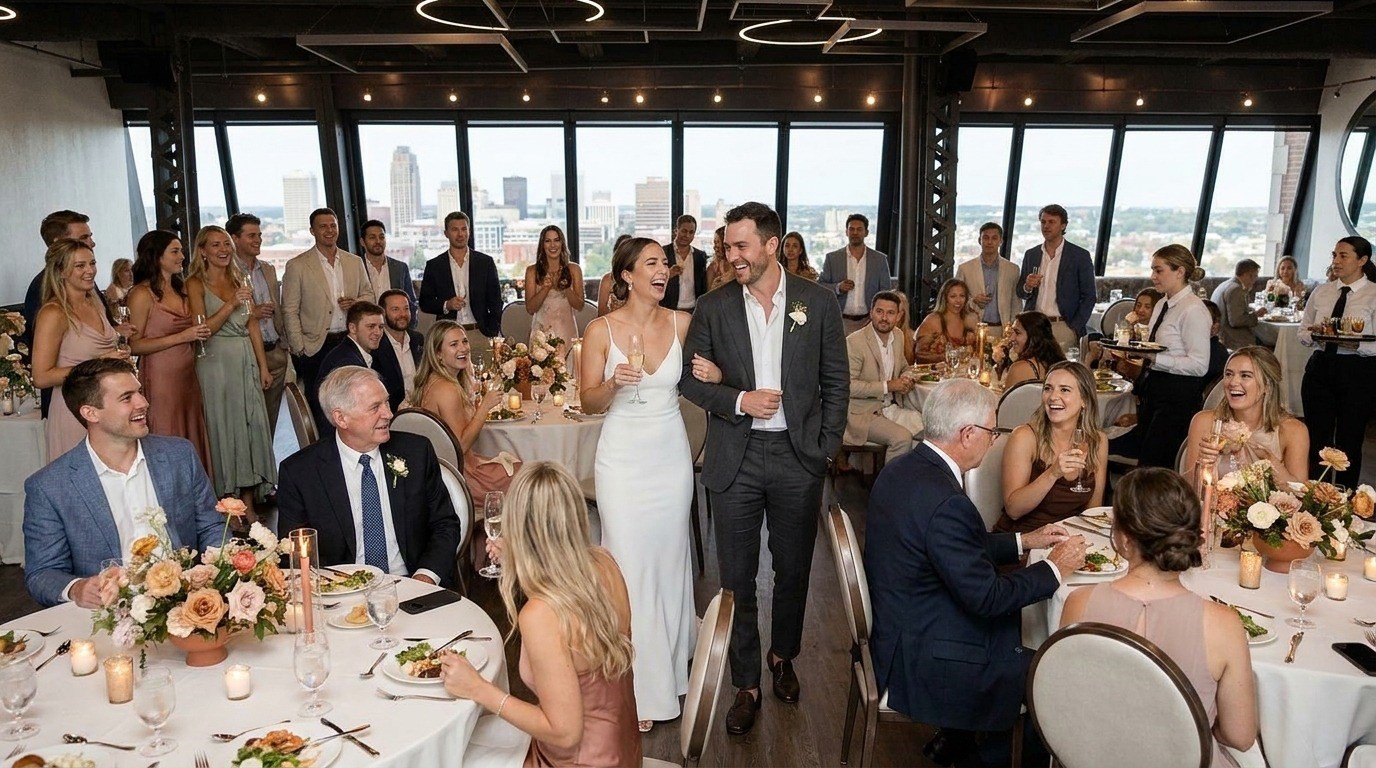
The Owl Bar downstairs still has the wooden owls that winked when the illegal whiskey arrived — and the ballroom upstairs hasn’t lost a single ounce of that Prohibition-era swagger.
Step into the Grand Ballroom at The Belvedere and your eyes go up before anything else. Not to gauge the size — to take in the ornamentation. This building opened in 1903 as a luxury hotel in Baltimore’s Mount Vernon district, and the architects treated the ceiling like a canvas. Gilded plasterwork, detailed cornices, the kind of craftsmanship that would cost a fortune to reproduce today and that nobody would bother trying. At 290 seated for dinner, the room hits that sweet spot where a wedding feels full and electric without becoming a logistics headache.
One floor down, the Charles Ballroom seats 220 in a more intimate scale — lower ceilings, warmer proportions. For smaller weddings or rehearsal dinners, the John Eager Howard Ballroom fits about 100. Then there’s the 13th Floor rooftop lounge, which sounds like a speakeasy in a Fitzgerald novel because that’s essentially what it is.
JFK attended events here. So did Woodrow Wilson. If you’ve watched Mad Men, you’ve seen it — Season 3 features the interior. The building earned its spot on the Historic Hotels of America registry for reasons that become obvious within five minutes of walking through. An attached parking garage solves the urban venue parking problem, full ADA accessibility means no guest is left navigating workarounds, and a dedicated coordinator who knows every quirk of the space keeps the day running tight.
Capacity: 100–290 seated (depending on ballroom) Spaces: Grand Ballroom, Charles Ballroom, John Eager Howard Ballroom, 13th Floor rooftop lounge, ready suites Price Range: Grand Ballroom starts at approximately $47,500 for 160 guests; per-person F&B from $160+ Peak Season: Year-round (indoor venue), but May and October are most popular Best For: Couples who want Gilded Age grandeur in a city setting Pet-Friendly: No (service animals only)
That ornate plaster ceiling and all those hard surfaces give the Grand Ballroom a lively acoustic personality — sound bounces around with real energy, which is exactly what you want for a packed dance floor but demands careful speaker placement if you need speeches to stay intelligible during dinner. Here’s the hidden advantage: the room’s proportions naturally channel sound toward the center, so a dance floor positioned mid-room gets a boost you didn’t have to engineer. Because the building was designed as a hotel with flowing public spaces, transitions between cocktails in one ballroom and dinner in another feel seamless rather than staged. Load-in through the service entrance is straightforward for a downtown venue, and power capacity is solid — this building has hosted major events for over a century.
Now, about those owls. The Owl Bar on the ground level was a functioning speakeasy during Prohibition — one of Baltimore’s worst-kept secrets. Two carved wooden owls perched on the back bar were rigged with a buzzer system: when a shipment of whiskey arrived, the owls’ eyes would “wink” to signal patrons that drinks were available. Both owls are still there. The bar is still open. More than a few wedding after-parties have migrated downstairs, guests toasting under the same carved birds that watched Baltimore’s bootleggers a hundred years ago.
Official website: https://www.belvedereandcoevents.com/
Woodend Sanctuary & Mansion (Chevy Chase)
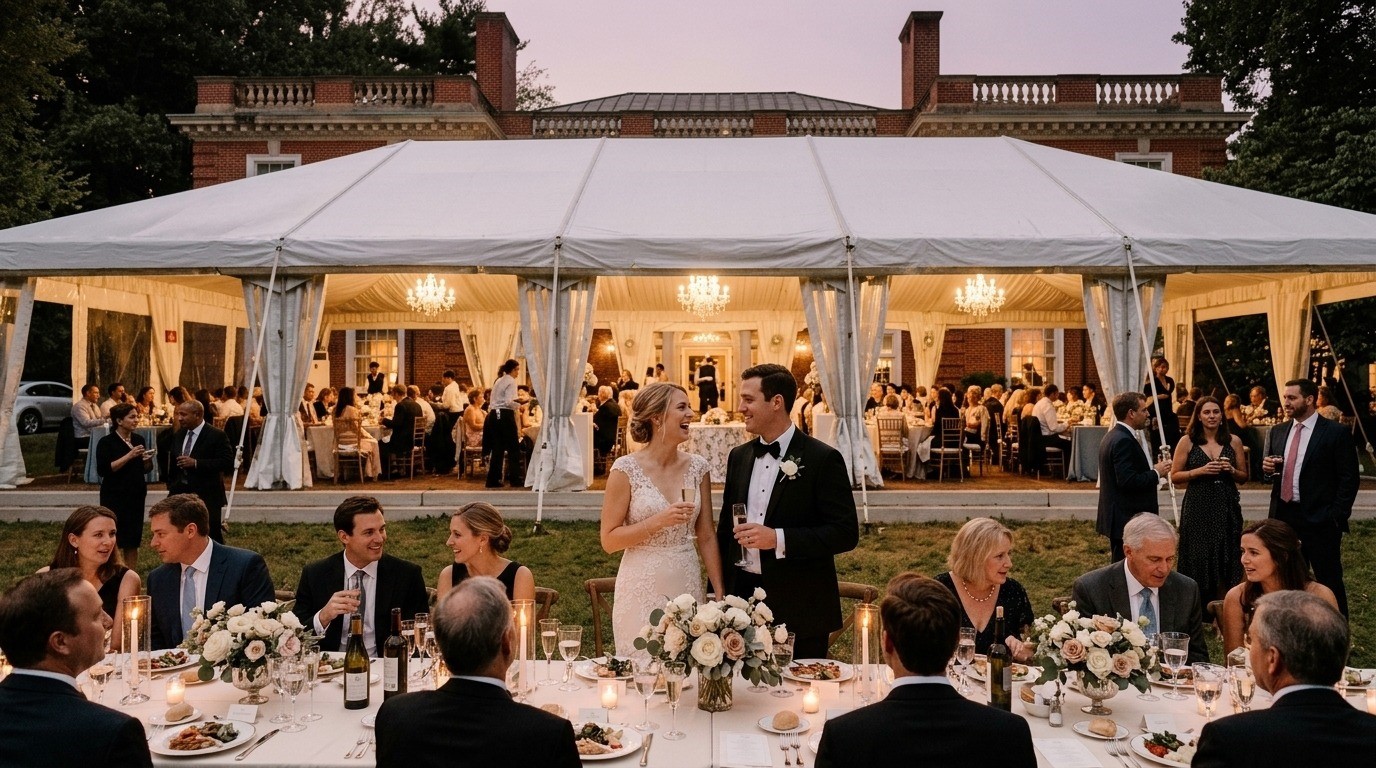
Forty acres of protected woodland, a mansion designed by the architect of the Jefferson Memorial, and a ceremony site where the canopy of old-growth hemlock trees forms a natural cathedral.
Nothing about the approach prepares you. You drive through the suburbs of Chevy Chase, turn onto a gravel lane, and the city vanishes. Woodend belongs to Nature Forward (formerly the Audubon Naturalist Society), and it operates as a genuine wildlife sanctuary — 40 acres of meadows, forest trails, and native plantings just minutes from the DC line. John Russell Pope designed the mansion at its center in 1927, the same architect who gave Washington the Jefferson Memorial and the National Gallery of Art. He brought that same sense of classical proportion to a more intimate scale here: a Georgian Revival manor with clean symmetry, tall windows, and a terrace that overlooks the grounds like a balcony in a period film.
Everyone who books here talks about the Hemlock Grove first. It’s a stand of old-growth trees where the overhead branches knit together into something that genuinely resembles the vaulted ceiling of a cathedral. No arch rental needed. No fabric draping. The trees do the work. In April and May, the surrounding gardens layer dogwood, azalea, and wild columbine into the backdrop. By September and October, the canopy has turned gold and copper. Either season, it’s the kind of setting that makes guests put their phones down — which, in my experience, is the highest compliment a venue can earn.
Inside, the mansion accommodates 50 to 120 for a winter reception. During tent season (April through November), the grounds expand to hold up to 170 with a climate-controlled tent. Two large dressing suites give the wedding party room to prepare. Since this is a working sanctuary, confetti and rice are off-limits — couples toss dried lavender, birdseed, or bubbles instead, which honestly photographs better anyway.
Capacity: Up to 170 (tented, April–November); 50–120 (indoors, December–March) Spaces: Hemlock Grove (ceremony), terrace tent, mansion interior, two dressing suites Price Range: $3,900–$8,800+ (rental fee; no sales tax; portion is tax-deductible) Peak Season: April/May (spring blooms) and September/October (fall foliage) Best For: Nature-loving couples who want intimate elegance near DC Pet-Friendly: Yes — dogs welcome for outdoor ceremonies (weather permitting)
Acoustically, Woodend is two different venues depending on where you’re standing. Out in the Hemlock Grove, sound disperses fast — you’re in an open forest, not an enclosed room — so the ceremony setup needs enough reach to fill the space without blasting the first three rows. Inside the mansion, the rooms run smaller with plaster walls that reflect sound generously, which means a scaled-down speaker setup actually outperforms an oversized one. On the logistics side, shuttles max out at 30-passenger minibuses because of the gravel drive, and parking caps at 70 to 90 cars. BYO alcohol with no corkage fees is a genuine budget advantage, though you’ll coordinate with one of the venue’s 8 to 10 approved caterers for food. With an 8-hour rental block, your entertainment team needs to move efficiently through setup and breakdown — no leisurely load-ins here.
Rachel Carson — the marine biologist whose book Silent Spring helped launch the modern environmental movement — walked these same trails regularly while developing the ideas that would change how the world thought about ecology. She was a frequent visitor to Woodend’s grounds, and something about knowing that sticks with you when you’re standing in the grove. Your rental fee goes directly to Nature Forward as a tax-deductible donation, which means your wedding funds the conservation of this landscape. Few venues let you celebrate a marriage and protect 40 acres of urban wilderness in the same gesture.
Official website: https://woodendsanctuary.org/
Antrim 1844 (Taneytown)
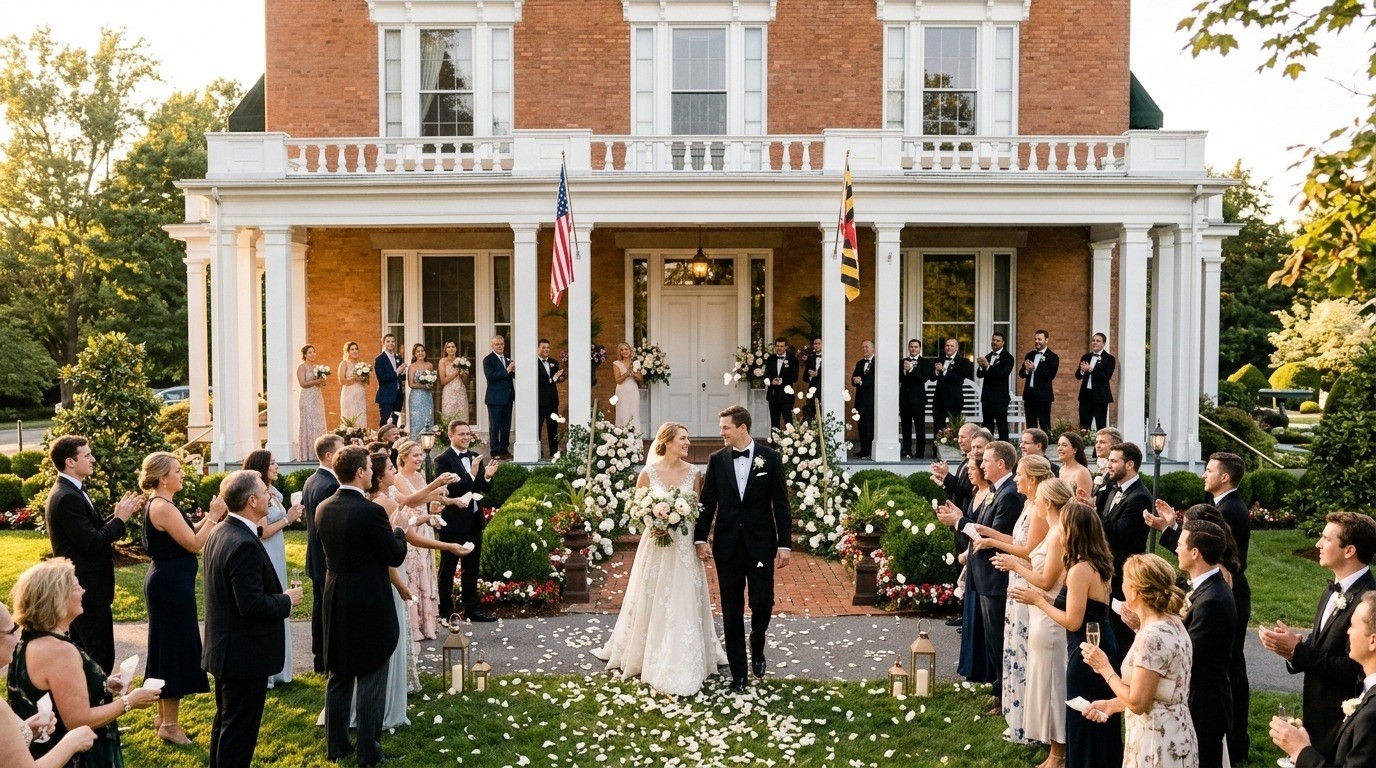
A 24-acre estate with a Civil War general’s headquarters, a 20,000-bottle wine cellar in the original boiler room, and a policy of hosting exactly one wedding per day — because your celebration shouldn’t have to share the property with anyone else.
Calling Antrim 1844 a venue undersells it. When you book here, you’re taking over a small historic village: the main mansion, multiple outbuildings, 40 guest rooms spread across 11 structures, formal rose gardens, a glass-enclosed pavilion, and the Smokehouse Restaurant whose kitchen handles all the catering. Twenty-four acres of Carroll County countryside surround it, the kind of rolling green views that make you forget Baltimore and Washington are both an hour away.
Ceremony options span a wide range. The English Tea Rose Garden holds up to 250 and, in late May through June, looks like it was staged for a BBC period drama. The Glass-Enclosed Pavilion seats 180 with garden views and climate control. The Pavilion Ballroom fits 220. But listing capacities misses the point. This is an estate where General George Meade set up his headquarters in the days before leading the Union Army to Gettysburg. Original wood paneling in the mansion, drawing rooms with fireplaces and crown molding, a “Widow’s Walk” on the roof where you can see the distant Gettysburg battlefield — the property carries a weight you can’t manufacture.
Recognition from both Wine Spectator (“Best of Award of Excellence”) and The Knot (“Best of Weddings” 2024) tells you something about the caliber of the food and beverage program. And the Pickwick Pub on the property — wood-paneled, intimate, stocked from that legendary cellar — is where many wedding parties end up for a late-night nightcap long after the reception has officially ended.
Capacity: Up to 250 (garden); 180 (glass pavilion); 220 (pavilion ballroom) Spaces: English Tea Rose Garden, Glass-Enclosed Pavilion, Pavilion Ballroom, drawing rooms, Pickwick Pub, Smokehouse Restaurant Price Range: All-inclusive starting at approximately $12,600 for 75 guests; per-person $175–$250+ Peak Season: May–October (rose gardens in bloom) Best For: History-and-wine-loving couples who want an estate takeover Pet-Friendly: Conditional — pets allowed in specific guest rooms; inquire about ceremony participation
If I had to pick one space on this property to perform in, it’s the glass pavilion. Glass walls and a hard floor create a bright, reflective acoustic environment where live instruments — especially a saxophone or violin — gain a shimmer that carpeted hotel ballrooms can’t touch. The reflections add brilliance without muddiness. Garden ceremonies need a clean outdoor sound setup, and the short walk from ceremony to pavilion or ballroom reception gives your cocktail hour a natural purpose as guests drift between spaces. One thing that matters more than most couples realize: Antrim hosts only one event per day. No pressure from another party waiting for the room. Setup time is generous. Sound check isn’t rushed. That single-event policy quietly elevates everything.
Let’s talk about the wine cellar. Published accounts cite 15,000 bottles. Local lore and the venue’s own history put it closer to 20,000 — either way, it’s housed in the mansion’s original boiler room, stone-walled and underground, feeling more like a European cave cellar than anything you’d expect in Maryland. Wine Spectator’s recognition makes sense the moment you walk in. If your wedding party includes anyone who takes wine seriously, a pre-dinner cellar tour with the sommelier is the kind of detail that turns a great wedding into a legendary one.
Official website: https://www.antrim1844.com/
Strong Mansion (Dickerson)
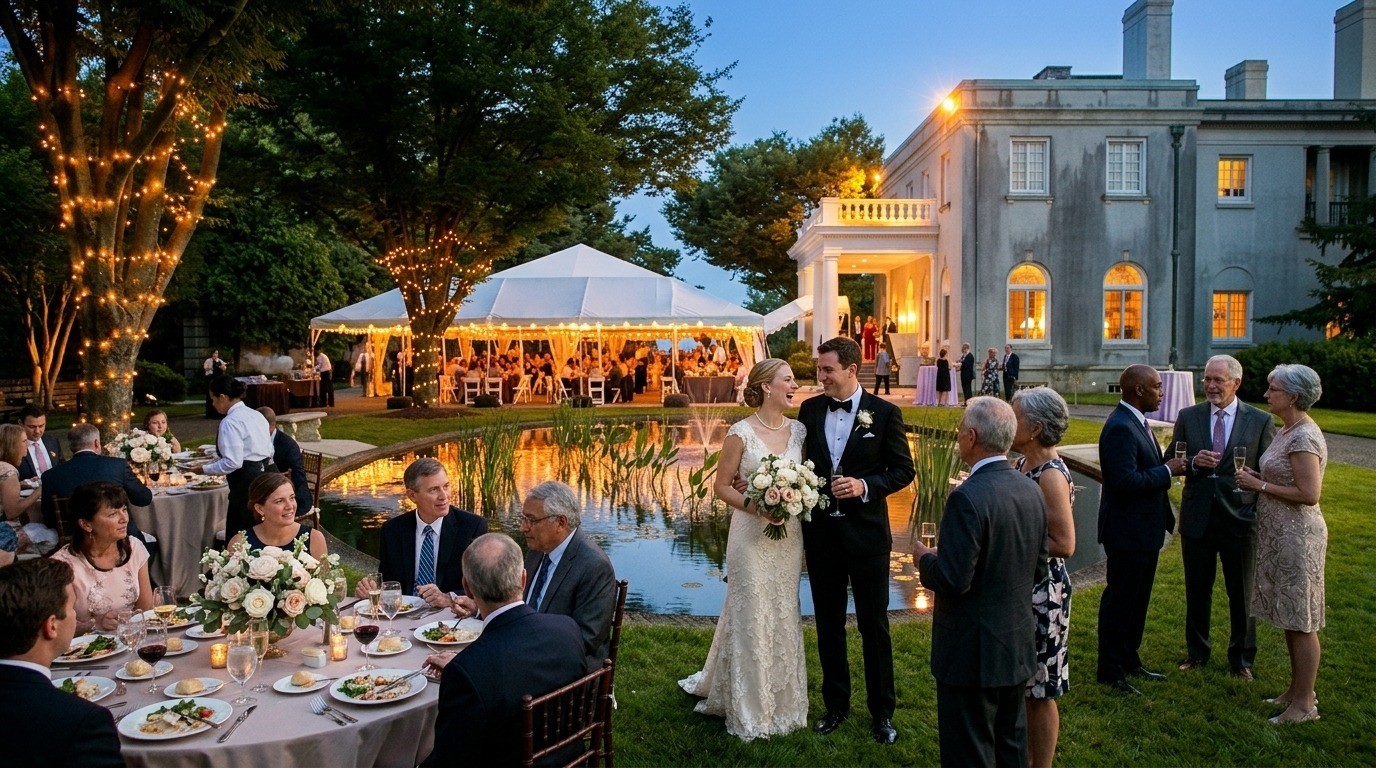
FDR loved this spot so much he nearly made it the presidential retreat — and when you see the Sugarloaf Mountain panorama from the tented patio, you’ll understand why Camp David had serious competition.
Picture a stone fortress on the side of a mountain, built by someone who wanted to see forever. That’s Strong Mansion. Perched within a 3,000-acre nature preserve on Sugarloaf Mountain — a National Natural Landmark — the views from the permanent tented patio sweep across the Monocacy Valley with the kind of scope that makes 175 guests feel like they have the entire state to themselves. Stone construction, formal gardens, a pond that catches the late-afternoon light — all of it dialed to a level of natural drama that no amount of decor could improve.
Receptions happen on the permanent tented patio, which seats 175 and faces the mountain panorama head-on. Three outdoor ceremony sites give you options: the formal garden, the pondside clearing, or the open terrace. An indoor ballroom stands ready as rain backup, though most couples booking Strong Mansion are booking it for what’s outside. Peak month? October, and it’s not close. Fall foliage on Sugarloaf Mountain turns the horizon into a wall of orange, red, and gold that looks painted rather than real.
At $3,600 to $4,300 for the site fee — which includes a 7-hour rental, the tent, and parking — this is notably lean for a venue with these views. You’ll bring in your own caterer from an approved list, and like Antrim, the venue hosts one wedding per day.
Capacity: Up to 175 (tented patio) Spaces: Permanent tented patio, three outdoor ceremony sites, indoor ballroom (rain backup), bridal suite Price Range: $3,600–$4,300 site fee (includes tent, 7-hour rental, parking); $1,000 security deposit Peak Season: October (peak fall foliage), with season running April–November Best For: Couples who want mountain panoramas without a mountain drive Pet-Friendly: Yes — for outdoor ceremonies
Playing on the tented patio presents a puzzle I actually enjoy solving. A roof overhead but open sides facing the mountain means sound escapes laterally instead of building the way it would in an enclosed ballroom. For a DJ or hybrid band setup, that means angling speakers to project inward toward the dance floor rather than letting energy bleed out toward the valley. Live music carries beautifully in this setting — the natural environment absorbs excess reverb, giving you clarity without harshness. Where it gets tricky is logistics. This is a mountaintop venue within a nature preserve. Load-in requires advance coordination, and power infrastructure is limited compared to a hotel or dedicated event center. Your entertainment company needs to plan for self-sufficient power or confirm the venue’s electrical capacity well ahead of time.
Franklin D. Roosevelt visited Sugarloaf Mountain repeatedly and came close to making it the site of his presidential retreat — what would eventually become Camp David. Security concerns ultimately pushed the choice to a site in the Catoctin Mountains, but the pull of Sugarloaf was real enough to land it on the shortlist. The surrounding nature preserve was kept private specifically to protect the mountain’s wild, untouched character. What that means for your wedding: the landscape in your photos hasn’t been commercially developed, and it won’t be.
Official website: https://sugarloafmd.com/strong-mansion/
Ceresville Mansion (Frederick)
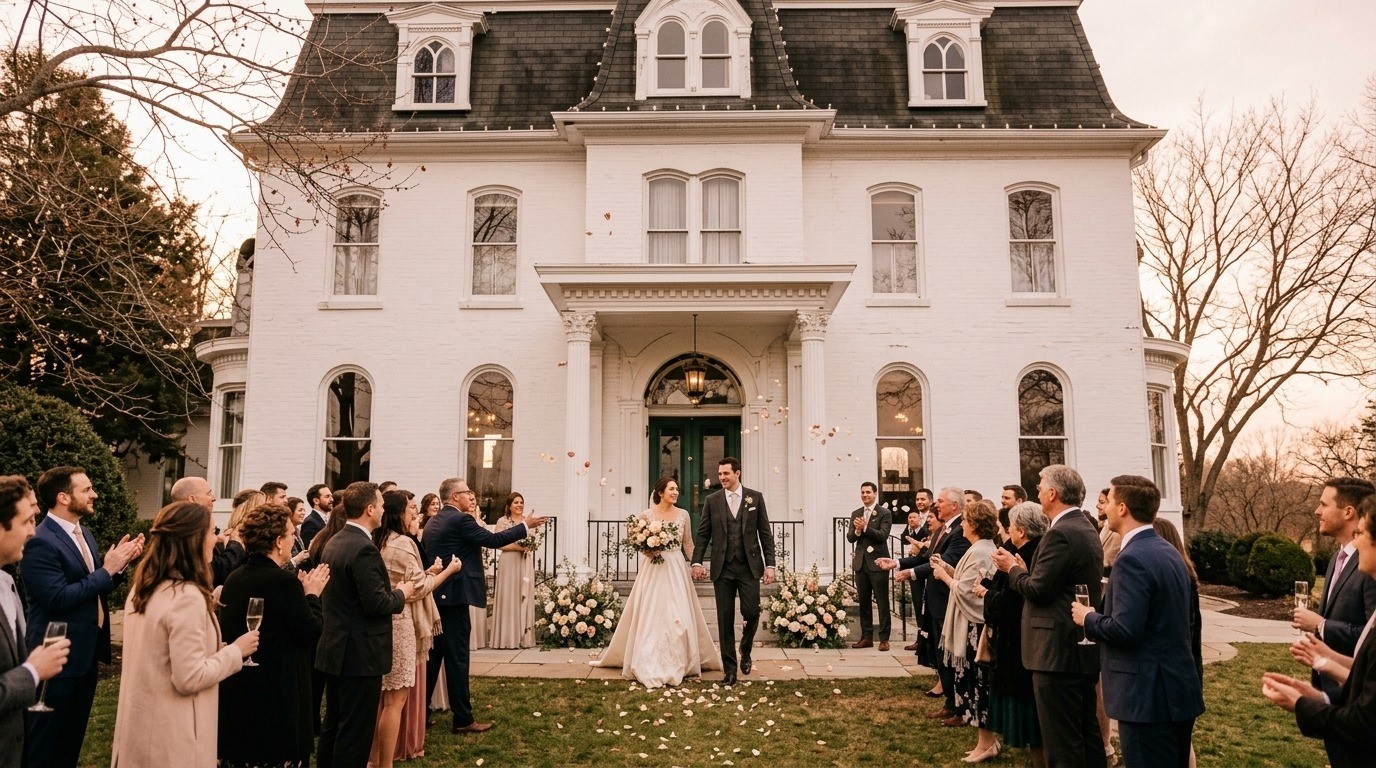
An 1888 riverside estate that someone designed to look like a French chateau in the middle of Maryland horse country — and then filled it with wisteria, lily ponds, and an all-inclusive planning team that handles every detail.
Most couples who visit Ceresville Mansion for the first time say something like “wait, this is in Frederick?” Fair reaction. Twenty-five acres along the Monocacy River, and a mansion built in 1888 with deliberate French chateau aspirations — symmetrical facades, formal proportions, an aesthetic that borrows heavily from the Loire Valley. Wisteria-covered pergolas connect the outdoor spaces. A lily-filled reflecting pool creates the scene that photographers schedule entire timelines around. Come in June, when the wisteria hits peak bloom, and the pergola walkway becomes a tunnel of cascading purple that looks more like Provence than central Maryland.
Inside, the Grand Ballroom seats 150 to 170 for a reception and carries the European feel through with high ceilings, elegant molding, and tall windows. Step outside and the Garden Terrace expands that capacity to 200 to 230 with a covered backup option. The Garden Vista Pavilion stretches the upper limit to 200 to 250, making Ceresville one of the more flexible estate venues in the Frederick area. Both the Bridal Suite and Groom’s Suite are purpose-designed prep spaces — not converted hotel rooms — where the wedding party can actually spread out and be comfortable.
Where Ceresville diverges from most historic estates is in how much it takes off your plate. Full-service in-house catering. In-house liquor license — no outside alcohol, which simplifies planning enormously. A dedicated Event Manager and personal attendant assigned to your wedding. The philosophy is straightforward: you handle the guest list, they handle the logistics. For couples who don’t want to spend months coordinating a dozen separate vendors, that tradeoff is a significant draw.
Capacity: 150–170 (Grand Ballroom); 200–230 (Garden Terrace); 200–250 (Garden Vista Pavilion) Spaces: Grand Ballroom, Garden Terrace, Garden Vista Pavilion, Bridal Suite, Groom’s Suite Price Range: Venue rental $5,000 (winter) to $12,000 (peak Saturday); catering from $130–$140 per person; financing plans available Peak Season: June (wisteria blooms) and December (holiday decor) Best For: Couples who want European elegance with all-inclusive simplicity Pet-Friendly: No (service animals only)
High ceilings, hard surfaces, a relatively compact footprint — the Grand Ballroom’s proportions work well for both live music and DJ sets. Sound fills the room evenly without the dead spots you sometimes encounter in larger, irregularly shaped reception halls. What demands attention is the timeline: a 5-hour standard reception window means your entertainment team needs a clear run-of-show with sharp transitions between dinner, toasts, and dancing. No extended cocktail hour bleeding into the schedule. On the coordination front, the all-inclusive model is a quiet advantage — your entertainment vendor talks to one in-house team rather than juggling a separate caterer, bar service, and venue manager. In practice, that streamlines planning considerably. Suite access opens six hours before the ceremony, giving the wedding party a comfortable prep buffer.
An 1818 stone mill stands next to the mansion — one of the few surviving structures from Frederick County’s early industrial period. Together with the reflecting pool, it frames what might be the most underrated photo location on the property: rough stone texture, still water, wisteria cascading overhead. In 1880s Maryland, most estates followed Georgian or Federal styles. Whoever built Ceresville had different ambitions — a piece of Europe transplanted to the Monocacy River valley. Nearly 140 years later, the illusion still holds.
Official website: https://www.ceresville.com/
How to Choose Between These Five Venues
Five mansions, five completely different experiences. Here’s how to narrow it down based on what actually matters for your wedding.
If your guest list is pushing past 200, The Belvedere’s Grand Ballroom (290 seated), Antrim 1844’s garden (250), and Ceresville’s Garden Vista Pavilion (250) give you the most room. If you’re planning something under 120, Woodend Sanctuary’s mansion interior or Strong Mansion’s tented patio will feel appropriately scaled without that echoing, “are there enough people here?” energy.
Budget reality: Strong Mansion’s site fee of $3,600 to $4,300 is the most accessible entry point, but remember you’re bringing in your own caterer on top of that. Woodend’s BYO-alcohol-with-no-corkage setup can save thousands. On the other end, The Belvedere’s Grand Ballroom starting at $47,500 and Antrim 1844’s per-person pricing of $175 to $250+ put those venues firmly in the premium tier. Ceresville falls in the middle and offers financing, which is worth knowing about.
On-site lodging makes Antrim 1844 the clear winner — 40 rooms across 11 buildings, the only venue here that functions as a true estate takeover. For non-negotiable fall foliage, Strong Mansion in October is the move. Spring blooms? Woodend in April and Antrim’s rose gardens in June are both extraordinary. The Belvedere operates year-round, making it the safest pick for winter or off-season weddings.
Couples who want the least vendor coordination will appreciate Ceresville’s all-inclusive model and The Belvedere’s in-house catering — both reduce the planning workload substantially. Prefer full flexibility? Strong Mansion and Woodend give you that freedom.
Why Entertainment Matters More Than You Think at Historic Mansion Weddings
After years of performing at estate wedding venues in Maryland and across the Mid-Atlantic, one thing keeps proving itself true: the older the building, the more your entertainment choice matters. Not less. More.
Historic mansions have acoustic personalities that modern event venues simply lack. High plaster ceilings reflect sound differently than drop-tile ceilings. Hardwood floors, stone walls, original glass windows — these surfaces interact with music in ways that can either amplify your celebration or muddy it into noise. Consider: a room built in 1903 was designed for human-scale sound. Conversation. A chamber quartet. A jazz combo. It was not designed for a subwoofer. That doesn’t mean you can’t bring modern sound equipment into these spaces, but it does mean your entertainment team needs to calibrate their setup to the room — not just plug in and hope.
Beyond acoustics, mansion weddings move through multiple spaces: a garden ceremony, a terrace cocktail hour, a ballroom reception, maybe a pub for the after-party. Every transition is a moment where energy either builds or stalls. An entertainment team that carries musical continuity across those shifts — string trio in the garden, jazz combo on the terrace, full dance party in the ballroom — creates a flow guests feel even if they can’t articulate it. That flow separates a wedding that feels like three events stitched together from one that feels like a single, evolving celebration.
Then there are the practical constraints — noise ordinances tied to landmark status, delicate floors that can’t handle heavy staging, limited power infrastructure. Your entertainment company should be asking about all of this during planning, not discovering it during load-in. Mansion weddings reward preparation. They punish improvisation.
Why DLE Event Group
A Maryland mansion wedding asks you to match modern entertainment energy to a space built for a different century. That tension — between the formality of the architecture and the live, dancing, emotional reality of a wedding celebration — is exactly where DLE Event Group’s hybrid DJ band concept thrives.
Our model pairs live musicians (saxophone, guitar, keys, percussion, vocals — scaled from 2 to 7+ players) with a professional DJ who doubles as your MC. In a rose garden ceremony, that might mean a violin and cello playing your processional live. On the terrace during cocktails, a jazz trio setting the mood. Once the reception opens up, a full hybrid band bringing the dance floor to life while the DJ ensures seamless transitions and access to any song in existence. Live instruments fill these old rooms with the warmth and presence they were designed for, while the DJ component gives you range, flexibility, and the ability to play that one song your college roommate will lose her mind over.
Eleven-time honorees in The Knot Best of Weddings Hall of Fame across more than a decade and over 100 successful events. Our service area extends well beyond New York City — we perform throughout the tri-state area, the Mid-Atlantic, and destination events worldwide. Maryland is very much in our range. Planning starts about six months out with 5 to 10 Zoom sessions where we learn your musical preferences, build your playlist, learn custom songs for special moments, and coordinate with your venue on every technical detail. We bring backup equipment for every critical component. At a venue with this much history and this much at stake, redundancy is the standard, not the upgrade.
Frequently Asked Questions
Let's Talk About Your Maryland Mansion Wedding
That’s what we do. And we’d love to hear what you’re planning.
Ready to start the conversation?
QUESTIONNAIRE
Need Assistance? Directly reach us at contact@dleeventgroup.com or 877.534.2424