Top 5 Rustic Barn Wedding Venues Rhode Island: A Performer’s Inside Look

A converted textile mill in Pawtucket, brick walls, concrete floors, 20-foot ceilings. The first time I rolled cases into a room like that I expected the worst on paper: a sound engineer’s nightmare with slap-back hash echoing off every surface. Then I plugged in, ran a level check, and the room answered the way a good guitar does when you strike it cleanly. Tight. Present. Whoever restored that 1912 building knew exactly what they were doing.
That’s the trick of the rustic, barn, and industrial-chic category in Rhode Island. It looks like one thing (weathered timber, exposed brick, vineyard rows running off toward Narragansett Bay) and it behaves like another. The barns here are framed in heavy old-growth timber that holds bass frequencies the way a cello body does. The mills have been gut-renovated with acoustic treatment hiding behind every “raw” beam. The vineyards are working farms with three-phase power runs that a touring rig would respect.
Rhode Island packs all of it into roughly 1,200 square miles. You can do a vineyard wedding in Middletown, a 127-acre farm wedding in Bristol, a Norman Romanesque manor-and-vines wedding in South Kingstown, a brewery wedding in Pawtucket, and a 1920s urban industrial ballroom wedding in downtown Providence, and never drive more than 45 minutes between them. That density matters. The rustic barn wedding venues Rhode Island couples are choosing from aren’t a single look. They’re a spectrum. Here’s the honest tour.
Why Rustic, Barn & Industrial-Chic Venues Work in Rhode Island
The rustic-and-industrial category in this state benefits from something most regions don’t have: scale compression. Because Rhode Island is small and densely settled, the venues that fall under this umbrella have had to earn their keep against luxury coastal competition. A Newport-area vineyard can’t get away with a folding-chairs-in-a-field aesthetic when Belle Mer is twenty minutes down the road. So the rustic venues here have polished up. The barns have heated floors and sailcloth tents. The mills have climate control and bridal suites. The vineyards have on-site lodging and full-service catering.
For couples, that polish solves the real problem with this category nationally. Rustic spaces are gorgeous in October daylight and rough by 11 p.m. when guests want a real bathroom, a real bar, and a dance floor that doesn’t kick up sawdust. Rhode Island’s versions don’t have that problem.
From the entertainment side, three things matter here. First, timber and brick rooms have better acoustics than ballrooms because they absorb the right frequencies and let the right ones bloom. Second, power is rarely an issue at the established venues; they’ve already wired for events. And third, intimacy in these rooms is real. A 150-person reception in a restored mill feels closer and louder than 300 people in a hotel ballroom. That changes the night.
The Venues
Newport Vineyards (Middletown)
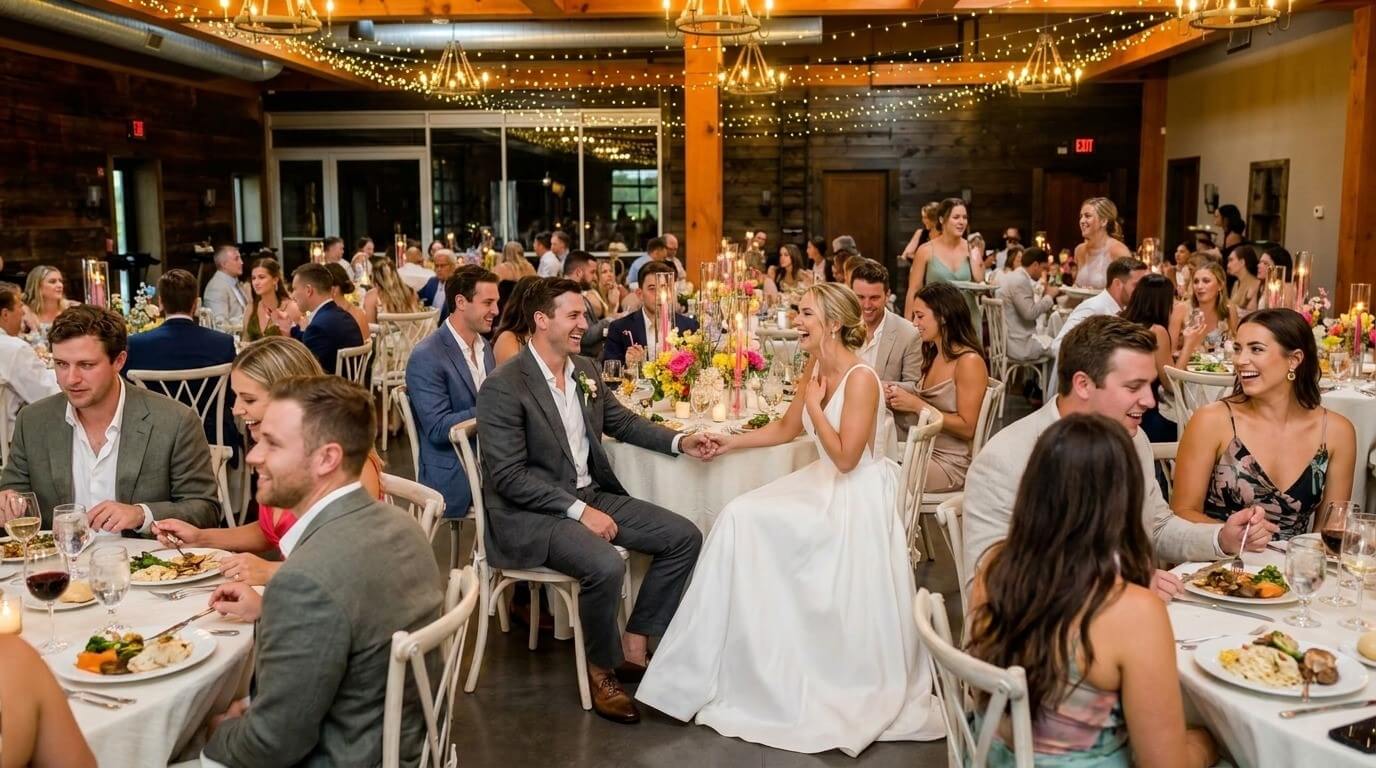
A working 100-acre vineyard where reclaimed barn wood meets scratch-kitchen dining, and where the bottle on your favor table can wear your face on the label.
The drive in tells you what kind of place this is. You’re on Aquidneck Island, but you’ve left the cliff-walk Newport behind. Vines run in neat rows toward the horizon. There’s a tasting room, a brewery operation (Taproot, on-site), and a series of event spaces that don’t try to disguise their farm bones. The Meadow Room has glass garage doors that roll up to open the room to the fields, and the Tank Room sits right next to working fermentation vessels. It smells like a winery in here because it is one.
Inside, the design language is industrial-chic crossed with farmhouse. Chandeliers hang from rough-hewn beams. The walls carry that warm reclaimed-wood patina that photographs beautifully under string lights. It’s not a barn pretending to be a ballroom, and it’s not a ballroom pretending to be a barn. It’s the actual middle ground, which is rarer than the wedding-blog industry pretends. The vineyard was established in 1995 to keep Aquidneck Island farmland out of the hands of residential developers, and that origin story still shapes the place. It feels lived-in and worked-on, not staged.
Capacity: 100–150 seated dinner Spaces: Meadow Room (glass garage doors), Tank Room (rehearsal dinners), outdoor ceremony lawn with meadow views Price Range: Rental $2,000–$8,000; ceremony fee $1,500; average all-in around $33,000 Peak Season: September (harvest) Best For: Foodie couples who want winery-rustic with serious in-house catering Pet-Friendly: Conditional — generally not inside; dogs occasionally permitted for outdoor ceremonies only
The Performer’s Take. The Meadow Room is one of the friendlier event spaces I’ve worked in this category. Those glass garage doors don’t just look good. They let you push some of your low-end energy out into the open air during peak dance hours, which keeps the room from boxing up. Ceiling heights are modest (this isn’t a cathedral barn), so you don’t want to overpower the space. A DJ-led hybrid with two or three live players sits perfectly here. Bigger horn sections start to crowd the band area. Power and load-in are straightforward; the staff knows event setups cold.
The Detail That Sticks. Newport Vineyards sits on a microclimate created by the surrounding waters of Narragansett Bay, giving it a longer growing season than any other inland vineyard in New England. And the wedding favor most couples don’t know about until they tour: custom estate wine bottles with the couple’s photo on the label, sent home with each guest. That’s a guest keepsake that survives the move from the fridge to the mantel.
Official website: http://www.newportvineyards.com/
Mount Hope Farm (Bristol)
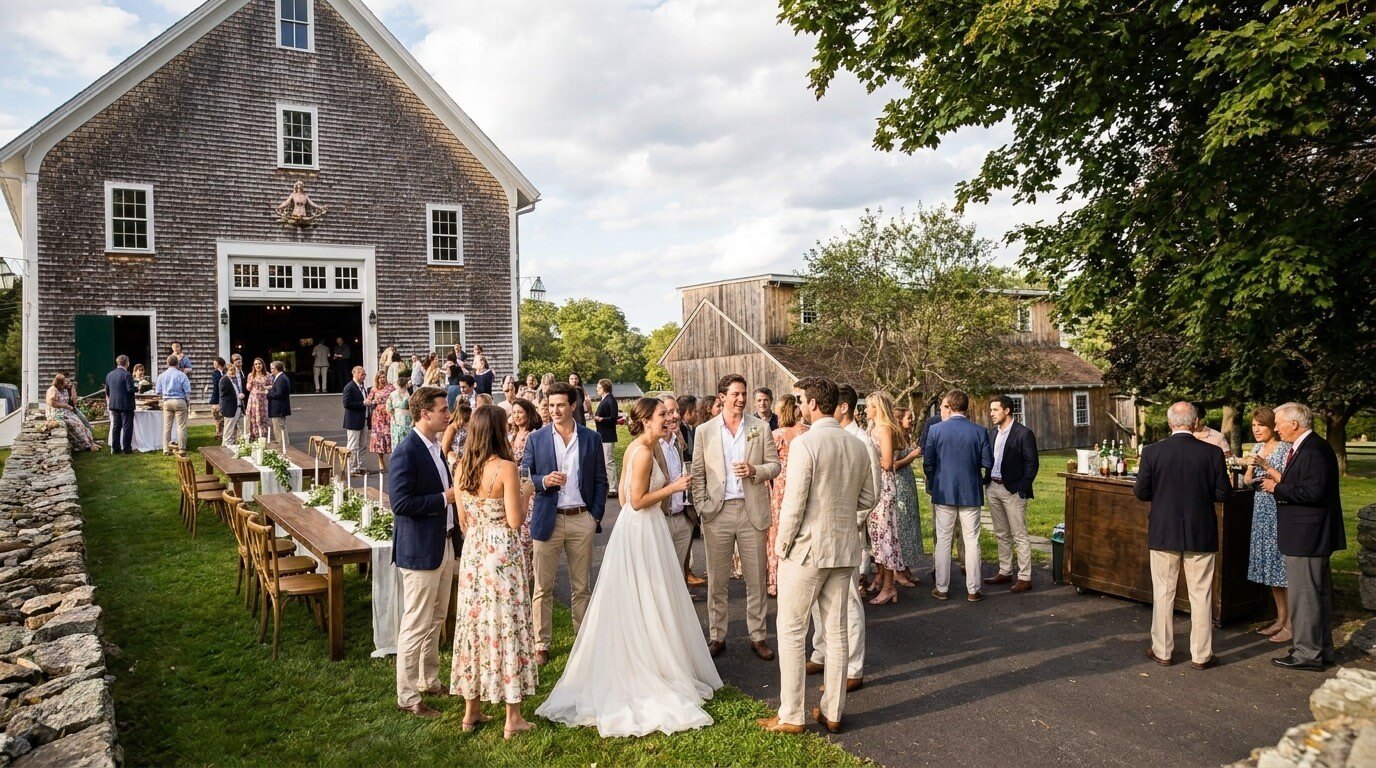
Picture 127 acres of working farm where the ceremony space overlooks the Mount Hope Bridge and the after-party can happen in an 1800s barn forty yards from the water.
Of the five venues in this guide, this is the most genuinely rustic, and I mean that as a compliment. The land has serious history. It’s the ancestral home of the Pokanoket people, and while “King Philip’s Seat” (the stone throne used by Metacom in the 17th century) is located on the lands, the specific acreage containing that site was returned to a Pokanoket trust in 2024. The farm was later owned by the Haffenreffer brewing family, who treated it as a preservation project rather than a development opportunity. You feel that lineage walking the property. The grass isn’t manicured to country-club tightness. The trees are old. The barn looks like a barn.
Two spaces matter for weddings. The Barn handles a tight, energetic seated dinner for up to 140 guests (120 for optimal comfort) with dancing, and the timber frame is original 1800s construction. The Cove Cabin is the wildcard, an Adirondack-style waterfront structure on a private cove looking out at the bridge. Tented, it can hold 300-plus, while the cabin interior accommodates 60. The combination of barn for after-party and cabin for waterfront ceremony is a setup most rustic venues can’t match. Lodging on-site at the 1745 Governor Bradford House lets the wedding party stay through the weekend without a Newport-priced room block.
Capacity: The Barn (up to 140 seated, 120 optimal); Cove Cabin (60 seated inside / 300+ tented) Spaces: The Barn, Cove Cabin, garden ceremony sites, Governor Bradford House lodging Price Range: Rental fees $2,000–$10,250 depending on space/season; ceremony fee $500–$1,000; all-in for 50 guests from ~$12,000 Peak Season: May–June (garden bloom) and September–October (fall harvest) Best For: Couples who want a true farm wedding with a waterfront layer and weekend lodging Pet-Friendly: Yes — welcome for outdoor ceremonies and garden photos
The Performer’s Take. The Barn is one of those rooms where a heavy timber frame does favors for live music. Bass frequencies settle into the wood instead of bouncing around hot. The room is small enough that you don’t need a wall of PA; under-powering is actually the smarter choice. Let the natural resonance carry. For the Cove Cabin under a sailcloth tent, you’re effectively doing an outdoor show with a fabric roof. Budget for a generator backup, plan for wind off the bay, and use mid-sized arrays angled toward the dance floor rather than the open side. Sunset over the bridge is unbeatable for first-dance timing.
The Detail That Sticks. “King Philip’s Seat,” the stone throne used by Metacom in the 17th century, is still on the property and is generally considered one of the most significant indigenous historical sites in southern New England. The wedding takes place on land continuously cared for since well before the colonies were a country. That’s an opening line for a toast nobody else’s venue can give you.
Official website: http://www.mounthopefarm.org/
Shepherds Run (South Kingstown)
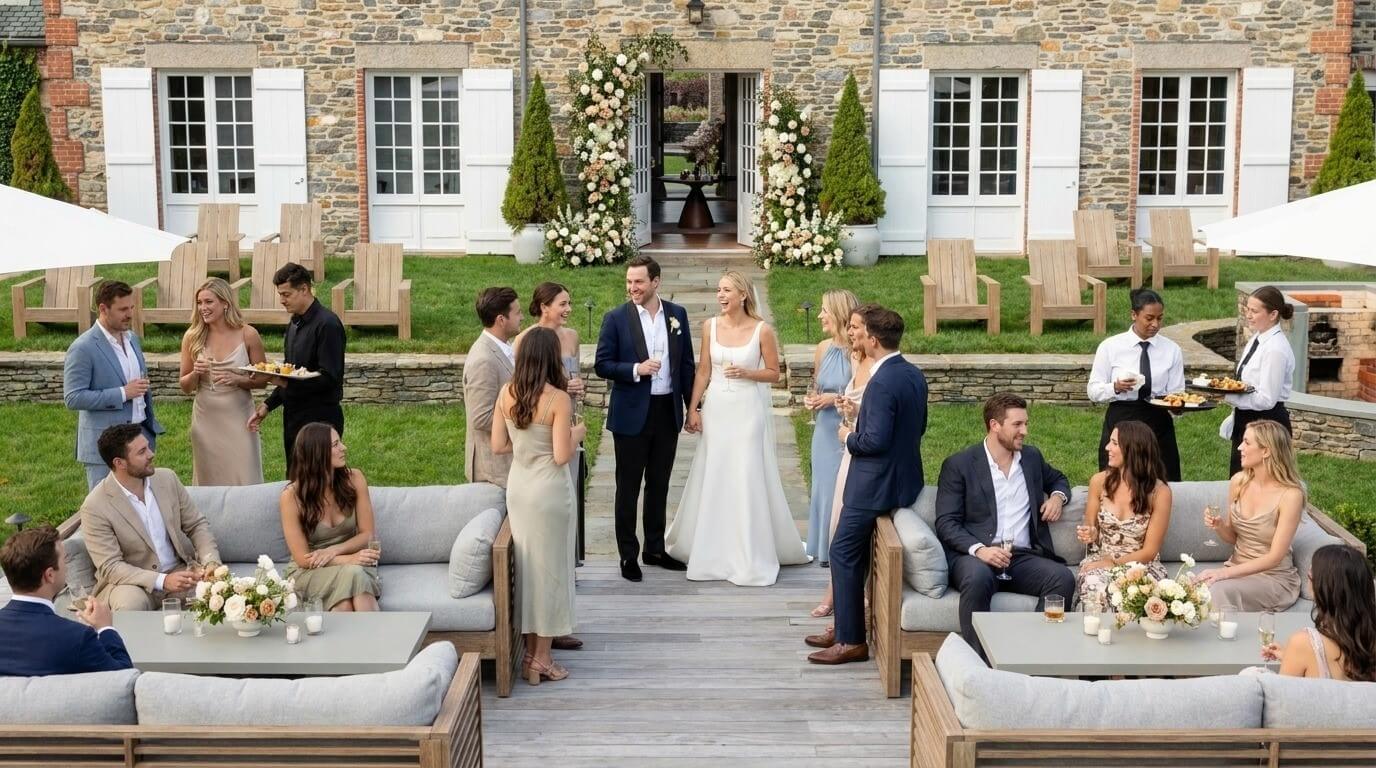
Thirty-six acres of Norman Romanesque manor that operates as a vineyard, a 26-room boutique hotel, and a spa, which means your entire wedding weekend can happen inside one stone wall.
If Newport Vineyards is the working farm and Mount Hope is the historic homestead, Shepherds Run is the Nancy Meyers movie. The main house was built in 1933 as a summer residence for Rush Sturges, a Providence lawyer with strong opinions about architecture. The result is a Norman Romanesque stone manor that, when you photograph it at golden hour, will convince half your guests you got married in Tuscany. The vineyards run right up to the building. The walled garden was designed by Beatrix Farrand, the same landscape architect who designed the White House gardens and the only female founding member of the American Society of Landscape Architects.
Then it gets weirder. In 1959 the estate became a convent for the Sisters of the Cross and Passion. It stayed that way for decades before being restored into the current vineyard-and-hotel hybrid. That layered history shows up in the bones. The stone halls feel ecclesiastical, the gardens feel European, and the newer build-outs (the Event Hall, the sailcloth tent option) feel contemporary without fighting the original architecture.
The “vertical resort” model is what makes this venue function for big weddings. Guests fly into Providence, drive 35 minutes south, check in to one of 26 luxury rooms, do the rehearsal dinner in the walled garden, get married Saturday, dance until last call, and never leave the property until Sunday brunch. The 10:30 p.m. alcohol cutoff is a venue-and-area constraint worth planning around, since it bumps the closing dance set earlier than couples expect.
Capacity: Up to 300 (Event Hall or sailcloth tent) Spaces: Event Hall, sailcloth tent, Walled Garden (ceremony/cocktails), 26 luxury guest rooms, on-site spa Price Range: Site fees $5,000–$7,500 per space; all-inclusive for 150 guests starts around $63,000 Peak Season: June (peak vineyard lushness) and October Best For: Weekend takeover weddings where the entire party stays on-property Pet-Friendly: No — per official venue FAQ
The Performer’s Take. Two acoustic environments to plan for. The Event Hall is a hard-surface, stone-influenced room that needs absorption. Drape, fabric, even body heat from a full guest list does work for you here, but a smart sound tech will high-pass cut to keep low-mid muddiness from building up against the stone. The sailcloth tent option is a different conversation entirely. Open sides mean sound dissipates fast, which is fine for dinner but flat for dancing. You want denser arrays for the tent and a wedge or two for the dance floor itself. The 10:30 p.m. alcohol cutoff means the energy needs to peak earlier; front-load the high-tempo dance set into the 9:30-10:15 window.
The Detail That Sticks. The walled garden was designed by Beatrix Farrand, the landscape architect responsible for the White House gardens and the only woman among the founding members of the American Society of Landscape Architects. Ceremonies happen inside walls she laid out by hand in the 1930s. That’s a piece of trivia worth knowing because it changes how you photograph the space; the garden’s geometry rewards wide-angle shots from the corners.
Official website: http://shepherds.run/
The Guild (Pawtucket)
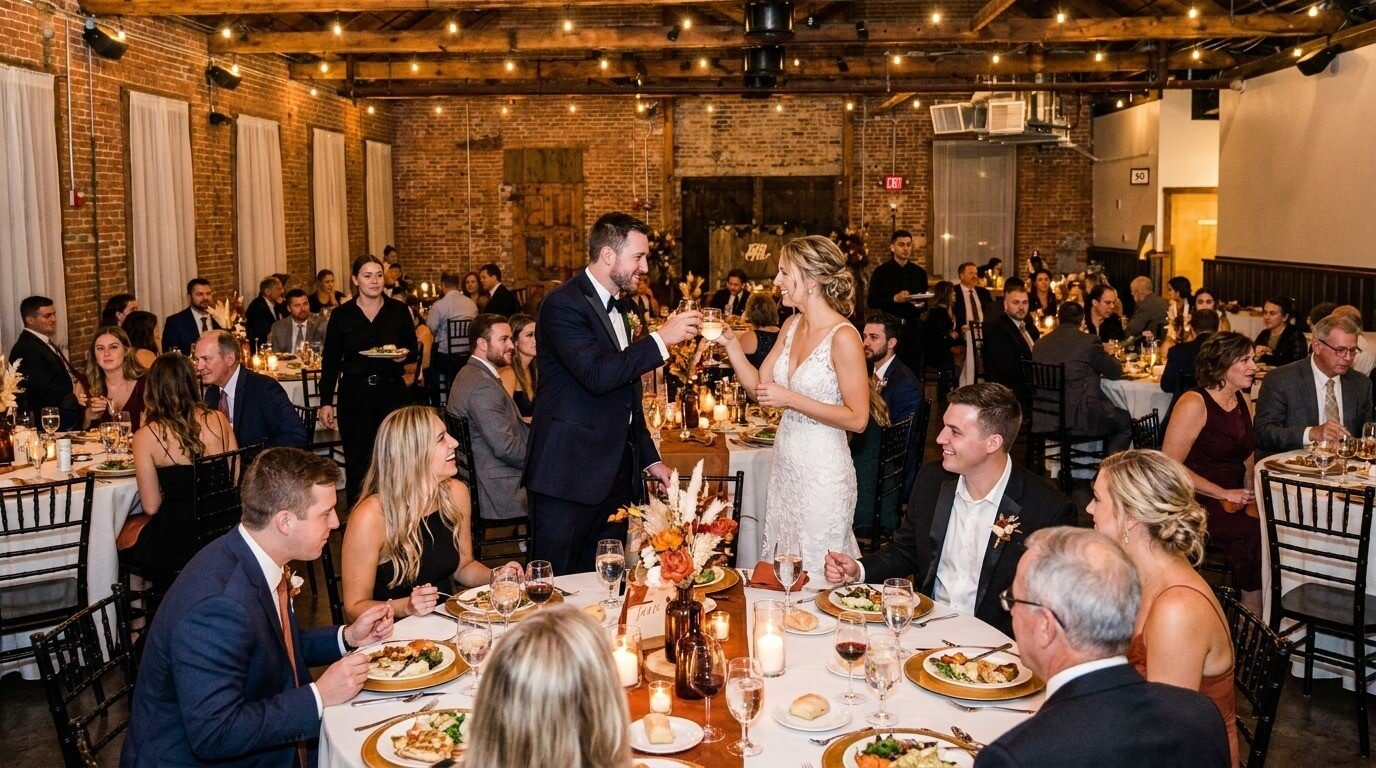
Imagine a 1912 textile mill reborn as a working craft brewery and wedding venue, with 20-foot ceilings, exposed brick, and an event “barn” built inside the industrial shell.
This is the venue that flipped my expectations of what an industrial-chic room could be. The building was originally the Isle Brewers Guild, a cooperative for brewmasters to share space and recipes. The current operators kept the bones (red brick, heavy timber, polished concrete floors) and built what they call “The Barn” inside the larger industrial volume. It’s a barn-shaped event space tucked inside a 1912 mill, which sounds like a gimmick until you stand in it. The proportions work. The light works. The “industrial heritage” thing isn’t a sticker; it’s the building.
The vibe shifts from refined to functional and back as you walk through. The main event area is climate-controlled and clean, but you’re close enough to the production side that during cocktail hour you can hear the hum of working brewery equipment and smell the hops on the air. That sensory layer makes the room feel alive in a way pure event-space rentals don’t. Outside, a patio looks over the beer garden, another usable space for cocktail hour overflow or a relaxed pre-dinner gathering. The Guild also happens to be the most pet-friendly venue on this list by a wide margin. Leashed dogs are welcome both indoors and outdoors. If your golden retriever is in the wedding party, this is the room.
The DIY-friendly model matters here too. Open catering policy. Food trucks welcome. Beverages must come from the in-house brewery, but the beer is the reason most couples are touring this place anyway.
Capacity: 150 seated dinner (The Barn); 225 cocktail style Spaces: The Barn (main event), outdoor patio and beer garden, private bridal suite Price Range: Site fee $5,500–$8,500+ (covers space and bartending) Peak Season: Year-round (fully climate-controlled) Best For: Craft-beer-loving couples who want industrial authenticity with DIY catering flexibility Pet-Friendly: Yes — leashed dogs welcome indoors (with prior coordination during food service) and outdoors
The Performer’s Take. This room rewards bands. The mill’s brick-and-timber combination produces a present, slightly forward acoustic that makes guitars and horns sit beautifully in the mix. The 20-foot ceilings give vocal harmonies the headroom they need without smearing into reverb mush. The concrete floor is the one variable to plan for. It’s reflective, and at high volume the slap can build up. We typically use rugs under the rhythm section to break up the floor reflections, and we keep PA cabinets slightly elevated and angled. Load-in is friendly: wide doors, ground-level access, real power. This is the easiest setup of the five venues in this guide.
The Detail That Sticks. “The Barn” is literally a barn-shaped event space built as an architectural nest inside the heavy industrial shell of a 1912 textile mill. You can stand on the patio with a craft beer and see both the original brick warehouse wall and the modern timber event structure inside it, two layers of Pawtucket’s industrial history occupying the same footprint. The Isle Brewers Guild cooperative origin (brewmasters sharing space and recipes) is still embedded in how the building operates.
Official website: http://www.theguildri.com/
The Ballroom at Providence G (Providence)
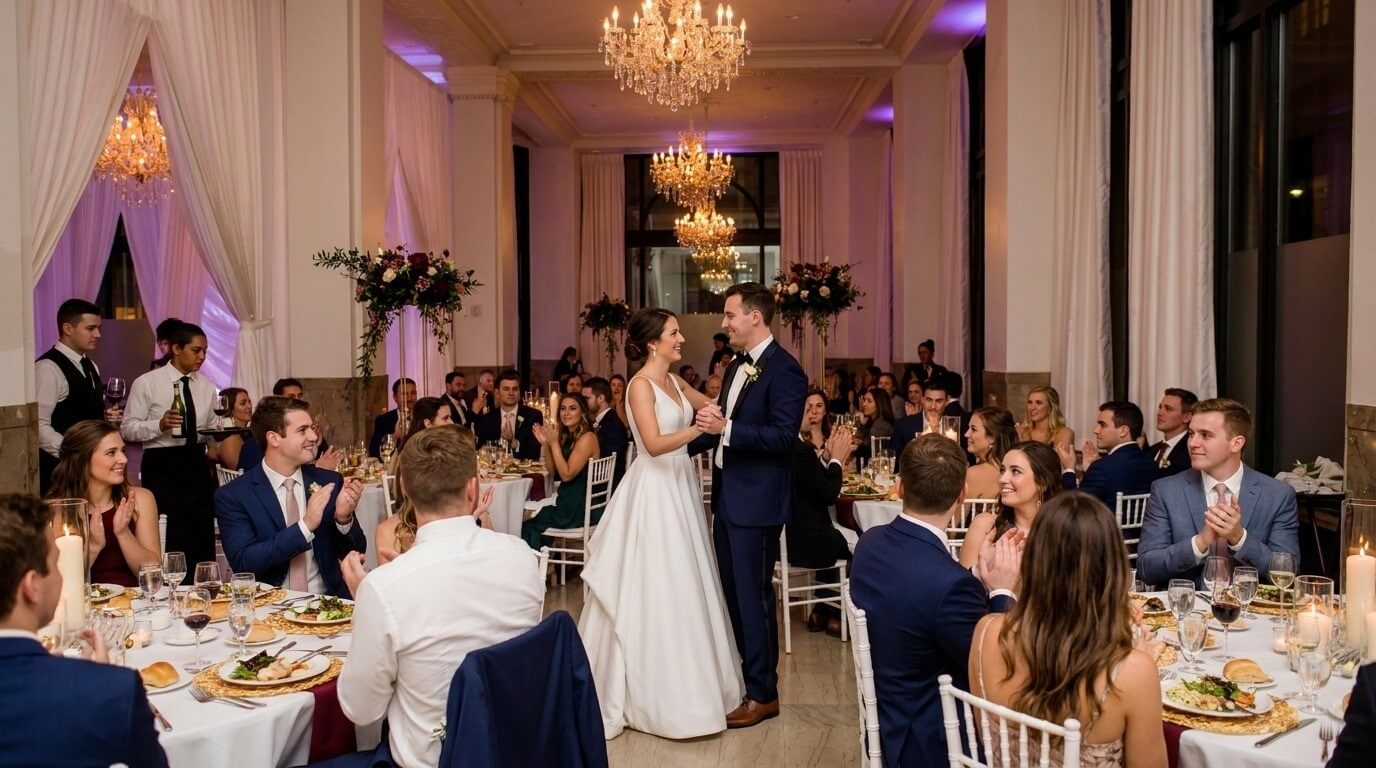
Once the lobby of a 1920s utility-company headquarters, now a downtown ballroom with a rooftop ceremony space, original arched windows, and a gastropub one floor down for the after-party.
The Providence G occupies the former Providence Gas Company headquarters, built in 1920. The Ballroom was the building’s main lobby, the room your grandparents would have walked through to pay their gas bill in 1925. After decades of vacancy, it was meticulously restored as part of the downtown Providence revitalization push. The arched windows are original. The Greek key molding around the ceiling is original. The marble floor is original. What changed is everything else. It’s now climate-controlled, the lighting is on dimmers, the bar service is restaurant-grade, and the rooftop above the building has been built out as a usable ceremony space looking over the Providence skyline.
That stacked layout is the venue’s signature move. Ceremony on the rooftop. Cocktail hour as the room flips. Dinner and dancing in the Ballroom. After-party downstairs at GPub. No shuttles. No moving guests across the city in heels. Just an elevator and a staircase. The Ballroom team calls it the “progressive wedding,” and once you’ve worked one, the term makes sense. The night progresses vertically through the building.
The 1920s urban-industrial character is what places this venue in the rustic-chic category despite being downtown. The exposed mechanical elements, the original utility-era proportions, the way the room sits between historic grandeur and warehouse warmth. It doesn’t fit the historic mansion category, and it isn’t a farm. It’s the industrial-urban end of the rustic-chic spectrum.
Capacity: 250 seated (Ballroom); 200 (Rooftop ceremony); 350 standing cocktail Spaces: The Ballroom, Rooftop, downstairs GPub for after-parties Price Range: Rental $4,500–$7,000; meals $65–$130 per person; bar approximately $30 per person Peak Season: Year-round; Rooftop peaks June and September; legendary holiday décor in December Best For: Urban couples who want a vertical, no-shuttle wedding with multiple distinct spaces Pet-Friendly: Yes — welcome for rooftop ceremonies and photos in the ballroom
The Performer’s Take. The Ballroom is a tall, hard-surfaced room with arched windows that bounce mid-frequencies in interesting ways. It’s a flattering room for live vocals and acoustic instruments because the natural reverb is musical rather than washy. For the dance set, we point arrays away from the marble floor and toward the back wall to keep the bass focused instead of spreading. The Rooftop ceremony is a different animal: open-air, urban ambient noise from below (sirens, traffic, the occasional motorcycle), wind off the bay. Use lavalier mics for officiants. The Rooftop-to-Ballroom transition is a 5-minute elevator move for guests, which means you can’t drag your cocktail hour past 70 minutes without losing momentum.
The Detail That Sticks. The Ballroom you’re getting married in was once the public lobby of the Providence Gas Company, where customers paid their utility bills under those same arched windows in the 1920s. After the building sat vacant for decades, the meticulous restoration kept the original marble floors and Greek key molding intact. Most ballrooms borrow grandeur from imitation. This one earns it from utility-era civic architecture that never tried to be grand and somehow ended up that way.
Official website: http://providencegevents.com/
How to Choose Between These Venues
The five venues in this guide cover more ground than the category name suggests. They share an aesthetic vocabulary (timber, brick, raw materials, polished restoration), but the experiences they deliver are genuinely different. Here’s how I’d help a couple narrow down.
For couples building a wedding around food and wine, Newport Vineyards is the obvious starting point. The scratch-kitchen catering and estate wines are the centerpiece. The room is sized for a 100-to-150-guest celebration, which keeps it intimate. The custom-label bottle favor is a guest keepsake that travels home and gets remembered.
Looking for a true farm wedding with weekend lodging and waterfront drama? Mount Hope Farm makes more sense. The combination of the 1800s barn and the Cove Cabin overlooking the Mount Hope Bridge gives you two distinct event environments on one property. Lodging at the Governor Bradford House means your immediate family stays on-site. This is the venue for couples who want guests to settle in for two days, not just an evening.
Want one address to handle the rehearsal dinner, ceremony, reception, and Sunday brunch without moving anyone? Shepherds Run is the answer. The 26-room boutique-hotel-meets-vineyard-meets-spa model is rare. It works best for weekend takeovers in the 100-200 guest range. The 10:30 p.m. alcohol cutoff is a real planning constraint, so factor it in.
Craft-beer-leaning, dog-loving, DIY-flexible couples who want an industrial space with character should call The Guild. Year-round availability, open catering, climate control, and a setup that handles 150 seated guests comfortably. The pet policy alone narrows the field considerably; very few rustic-or-industrial venues let your dog be in the room during dinner. The Guild does.
Urban couples who want a downtown wedding with vertical flow (rooftop to ballroom to gastropub) will end up at Providence G. The “progressive wedding” structure eliminates shuttle logistics. Year-round availability and indoor capacity for 250 seated guests handle most guest counts cleanly. It’s also the best off-peak option in this guide; January and February frequently waive minimums.
On budget: the cheapest path is The Guild or Providence G with off-peak dates. Mid-range sits at Mount Hope Farm or Newport Vineyards. The premium spend is Shepherds Run, especially during peak vineyard months. The variance across this category can be a factor of three or four, so be honest about your number before you tour.
Why Entertainment Matters More Than You Think at These Venues
Rustic and industrial venues fool people. They look like rooms that don’t need much from the band; just plug in, play, the wood and brick will do the work. That’s about half true and entirely dangerous.
The half that’s true: timber-frame structures and old mills do have good acoustic foundations. They absorb high frequencies that would ring in a hotel ballroom. They give bass instruments a natural body. Live music tends to sound warmer in these rooms than it does in carpeted function halls. That part of the wedding-blog mythology holds up.
The half that’s dangerous: every one of these venues has a specific acoustic signature that punishes a generic setup. The Guild’s concrete floor turns slap-prone at volume. The Ballroom at Providence G has arched windows that bounce mids in unpredictable patterns. Shepherds Run’s stone walls eat low end if you’re not high-passing intelligently. Mount Hope’s barn handles a small ensemble beautifully and gets overwhelmed by a horn-heavy band. Newport Vineyards’ Meadow Room behaves differently with the garage doors open versus closed.
Power is the other under-considered variable. Established venues like these five have proper event power, dedicated circuits for the band, isolated runs that don’t share with kitchen equipment. The polish of these venues doesn’t mean you should bring less rig. It means the rig you bring needs to match the acoustic character of the specific room.
Then there’s the intimacy factor. A 150-person reception in a restored mill feels closer and louder than a 300-person reception in a ballroom. The energy compresses. That’s an advantage if your band knows how to play to a tight room. Dynamics matter more, the cocktail hour set can be quieter and more textured, the dance set can pull people in faster. It punishes anyone who shows up with one volume.
Finally, the polish-versus-authenticity tension. These are restored rustic spaces, not raw ones. Your entertainment should match. A four-person bluegrass band in a Pawtucket mill is going to feel like a costume. A laptop DJ in a 127-acre historic farm is going to feel like a missed opportunity. The right answer is a hybrid: live musicians for the parts of the night that need emotional weight, DJ-driven energy for the parts that need range and crowd-reading. That’s what these rooms were renovated to host.
Why DLE Event Group
The hybrid DJ band is what we built the company around. Live musicians (sax, guitar, keys, percussion, vocalists, configurable from two players up to seven or more) performing alongside a professional DJ who also handles MC duties. Live instruments carry the ceremony and the emotional inflection points. The DJ side carries the breadth: every song request, every era, every transition. You get the part of each that actually serves the moment.
For the rustic-and-industrial venues in Rhode Island, that format matters. A barn or a mill or a vineyard room wants warmth, and live instruments give you warmth no playback rig can match. But that same room also needs the range to take guests from a parent’s slow dance to a horns-up dance floor moment thirty minutes later, and that’s where a curating DJ outperforms even an excellent ten-piece band. Hybrid solves both.
The track record matters because rustic-and-industrial venues vary widely. Over ten years in, 100+ events, The Knot Best of Weddings Hall of Fame eleven times running (2013–2023). We work venues across NYC, Long Island, the Hudson Valley, Westchester, the Hamptons, and destinations beyond the New York metro when couples bring us up. We’ve worked enough varied rooms to read a new one fast and calibrate before the first guest arrives.
The planning process is where most entertainment companies fall short, and where ours is genuinely different. Five to ten Zoom planning sessions starting roughly six months out. Custom song learning for first dances, parent dances, ceremony pieces. Tailored edits for special moments. MC scripts developed with pronunciation guidance for family names and traditions.
Backup equipment doubled at every critical point. The performance is the visible part. The months of planning is what makes the performance possible.
FAQ
For peak-season Saturdays (May through October) at the more popular venues (Shepherds Run, Newport Vineyards, Mount Hope Farm), start looking 12 to 18 months out. Bristol and Providence-area venues are slightly more flexible at 12 months. Off-peak winter dates at The Guild or Providence G can often be secured with 6 to 9 months notice. Book your entertainment on a similar timeline; the best dates for top venues are also the best dates for top vendors.
It varies dramatically. The lowest-end realistic number for a 50-guest, off-peak Mount Hope Farm wedding is around $12,000 all-in. A 150-guest peak-season Shepherds Run weekend can run $63,000-plus before you count upgrades. Newport Vineyards averages about $33,000 for a typical 100-to-150-guest celebration. The Guild and Providence G fall into the $20,000-$50,000 range depending on guest count and food choices. The “rustic” label doesn’t automatically mean cheaper. The polished restoration costs money, and venues recoup it.
Every venue in this guide accommodates both. Newport Vineyards has an outdoor ceremony site overlooking the meadows; Mount Hope Farm offers garden ceremonies, barn dances, and the Cove Cabin waterfront option; Shepherds Run uses the Walled Garden for ceremonies; The Guild handles ceremonies indoors or on the patio; the Providence G stages ceremonies on the Rooftop and receptions in the Ballroom below. Same-venue ceremonies eliminate guest transport and tighten the timeline considerably. They’re almost always the right call when the venue supports them.
A hybrid live-band-and-DJ setup is the most versatile choice. Live instruments, particularly horns, vocals, and acoustic guitar, sit beautifully in the natural acoustics of mansion rooms, which were built for unamplified performance. A DJ component lets you cover the full musical range your guest list expects. You want a team that can scale the production to the room: smaller for the carriage house at Linden Place, fuller for the ballroom at Rosecliff. And you want a team that understands the rigging, floor-protection, and sound-level rules these venues operate under.
A hybrid format (live musicians plus a curating DJ) is the most versatile match for these venues. The rooms have warm acoustics that reward live instruments, but they also benefit from the breadth and crowd-reading of a DJ. Sizing matters too. Smaller barns (Mount Hope’s Barn at 100 guests) suit two-or-three-player live setups with a DJ; larger industrial halls (The Guild’s Barn at 150 guests, Providence G Ballroom at 250) handle four-to-seven-player configurations. Avoid generic loud-band-in-a-small-room setups; these spaces reward dynamic control over volume.
Two of the five do. Mount Hope Farm offers lodging at the 1745 Governor Bradford House, with limited rooms but excellent for the immediate wedding party. Shepherds Run is the only true full-service hotel option, with 26 luxury guest rooms allowing entire wedding parties (and many guests) to stay on-property. Newport Vineyards, The Guild, and Providence G don’t have on-site lodging, but all three sit within close range of plentiful downtown and Aquidneck Island hotels that most couples block out for guests. Providence G also has its own on-site gastropub (GPub) one floor down, which makes the after-party logistics easy even when guests are sleeping off-site.
Substantially, especially for the urban industrial venues. Providence G and The Guild often waive minimums in January and February, opening real high-end wedding options at a fraction of summer pricing. Shepherds Run, Newport Vineyards, and Mount Hope Farm are warm-weather operations primarily; they technically book year-round but lose their best assets (vineyards, gardens, waterfront ceremony sites) outside of May through October. Off-peak dates at the urban venues can save 30%+ compared to peak. Off-peak at the rural venues saves less but gets you better date availability.
Let's Talk About Your Rhode Island Wedding
You’re choosing from rooms where 1800s timber meets 21st-century sound design, where a 1912 textile mill hosts a ballroom built like a barn, where a 1920s gas company lobby becomes the cocktail hour for a rooftop ceremony. The rustic-and-industrial category in Rhode Island is full of venues that don’t look like what they used to be, and that’s exactly what makes them work as wedding spaces.
What they need from the entertainment side is someone who’s done the homework. Someone who’s read the room, knows where the slap will build up in a concrete-floor brewery, knows when to dial back the horn section in an old barn, knows how to use the natural reverb of arched stone windows as part of the mix rather than a problem to fight. That’s the work we do. Every wedding, every room, every time.
DLE Event Group has been performing hybrid DJ band weddings for over a decade. We’ve earned The Knot Best of Weddings Hall of Fame eleven times. Our service area covers the Northeast and destinations beyond the New York metro when couples bring us north.
Ready to talk?
We’d love to hear what you’re planning.
Reach out directly:
- Phone: 877-534-2424
- Email: contact@dleeventgroup.com
Ready to start the conversation?
QUESTIONNAIRE
Need Assistance? Directly reach us at contact@dleeventgroup.com or 877.534.2424