Top 5 Historic Mansion Wedding Venues in Connecticut: An Insider’s Guide

That’s what historic mansion wedding venues in Connecticut do to you. They don’t just provide a backdrop. They rewrite the atmosphere of your entire event. I’ve performed at estates where the floorboards were older than the Constitution and castles where granite blocks were hauled by oxen. I’ve run sound checks in conservatories designed by the same firm that landscaped Central Park and loaded gear through doors that Revolutionary War generals walked through. Every one of these buildings carries a weight that no amount of draping or uplighting can manufacture. It’s either in the walls or it isn’t.
Connecticut packs an unusual density of architectural periods into a small state—Art Deco bank vaults, Norman castles, English country manors, Federal-era mansions, Beaux-Arts estates. For couples who want a wedding that feels rooted in something real, something with a story older and larger than their own, this is the state to look at. And for someone in my line of work, these rooms are endlessly interesting to perform in, because no two of them handle sound, light, or energy the same way.
Why Historic Mansions and Estates Work for Weddings
From an entertainment perspective, these spaces are fascinating. High ceilings and stone or plaster walls create natural reverb—live instruments sound fuller, richer, more present than in a hotel ballroom with drop-tile ceilings and carpeted floors. But that same reverb can work against you if you don’t understand the room. A bass-heavy DJ setup in a marble hall will turn to mud. Acoustic instruments in a timber-frame conservatory will ring out beautifully. Knowing which approach fits which room is the difference between a dance floor that fills at 8:30 and one that stays half-empty all night.
And then there’s flow. Historic estates were designed for entertaining. They have parlors, galleries, terraces, gardens—distinct spaces that naturally move guests from one moment to the next. Ceremony in the garden. Cocktails on the terrace. Dinner in the ballroom. That built-in progression creates energy shifts that keep people engaged instead of planted at the same table for five hours. When the architecture choreographs the evening for you, everything—including the music—hits differently.
The Venues
The Society Room of Hartford (Hartford)
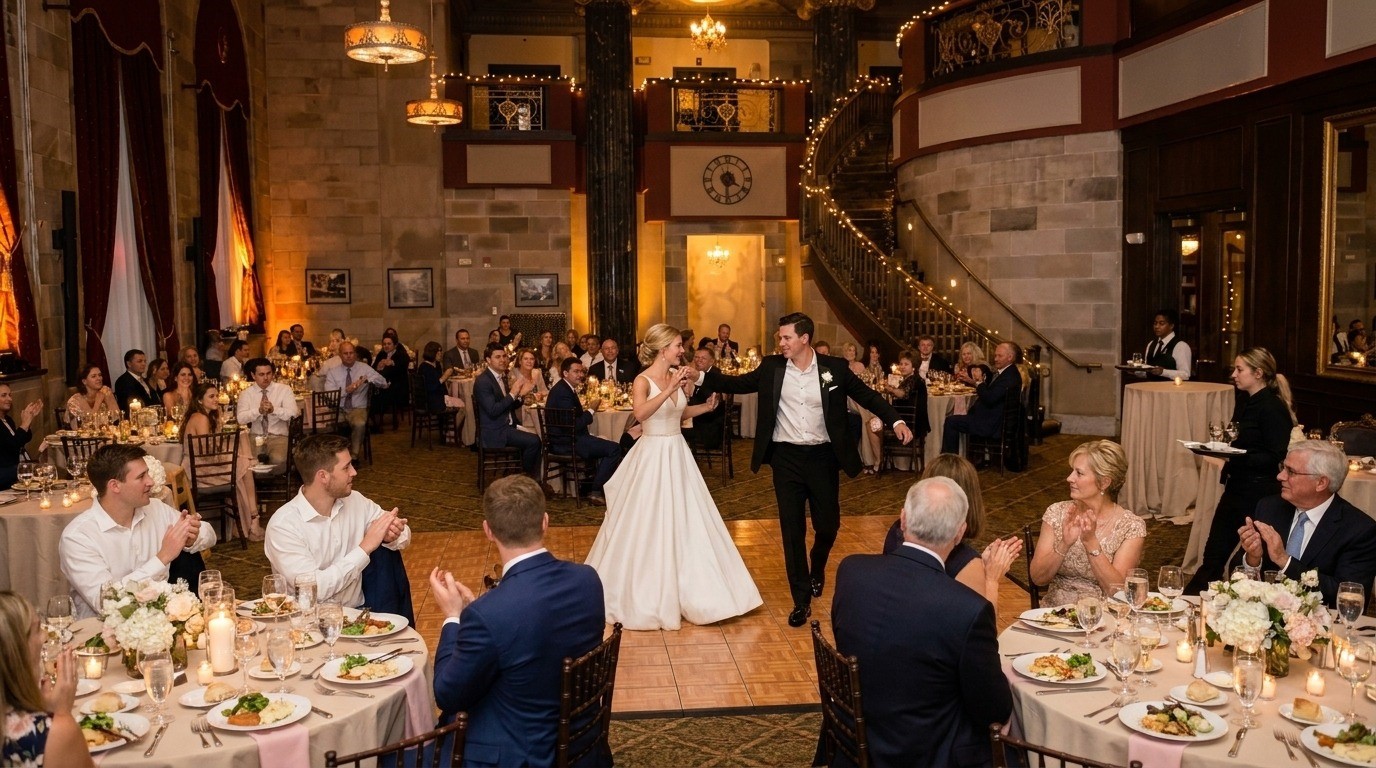
Imagine getting married inside a bank vault the size of a cathedral—because that’s essentially what this is.
The Society Room doesn’t ease you in. You enter through massive brass doors, and then you’re standing under 35-foot ceilings covered in gold leaf, surrounded by Renaissance Revival architecture that was built in 1834 to announce Hartford’s status as an insurance and industrial powerhouse. This was the Society for Savings bank, and whoever designed it wanted every depositor to feel like they were entrusting their money to something permanent. Two centuries later, that sense of permanence hasn’t faded.
The main floor is one enormous open room with a wrap-around mezzanine above it—and this is where the signature moment happens. Couples appear on the mezzanine and descend a sweeping staircase into the ballroom below. Locals call it the “Society Room Entrance,” and it’s earned the name. The room’s proportions are dramatic enough that the descent actually feels cinematic. Gold leaf catches the light from every angle. The original steel bank vault—still intact, still functional—sits off to the side, and it’s become the most distinctive portrait backdrop in the state.
Outside, Bushnell Park (the oldest public park in America) gives you green space in the middle of downtown Hartford. The venue’s exclusive caterer, Riverhouse Hospitality, runs the food program, and they’ve built in a detail I love: an “Irish Pub” lounge tucked away for the wedding party. After hours of portraits and receiving lines, having a private space with a drink that isn’t in a champagne flute matters more than you’d expect.
Capacity: Up to 300 seated (main floor and mezzanine); 400 for cocktail-style receptions Spaces: Grand ballroom with mezzanine, bank vault portrait room, Irish Pub lounge, Pratt Street access for outdoor portraits Price Range: $109–$179 per person (seasonal); ceremony fee $650–$795; 22% service fee Peak Season: September–December (holiday lighting and urban winter atmosphere) Best For: Couples who want Gatsby-era drama in a city setting Pet-Friendly: No (indoor historic facility)
The acoustics in this room are a performer’s puzzle—and a rewarding one. Those 35-foot gold-leaf ceilings create generous reverb—live instruments sound spectacular, but an overpowered subwoofer will blur everything into mush. The mezzanine entrance adds a logistical wrinkle: you need your MC and your music timed precisely to that staircase descent, because the room goes silent when every guest looks up. That pause is golden. You don’t fill it with music—you let it build, then hit the first dance or the welcome with something that matches the scale. The ballroom’s open floor plan means your dance floor can be massive, and because there are no pillars breaking sightlines, everyone in the room sees the energy when it peaks.
The original bank vault is one of those details you don’t believe until you see it. It’s not decorative—it’s the actual steel vault from the 1830s, complete with the locking mechanism. Couples use it for portraits, but some have turned it into a cigar lounge or late-night cocktail bar. The door alone weighs several tons. That vault has outlasted every financial crisis in American history, which—if you think about it—isn’t a bad metaphor for a marriage.
Official website: https://hartfordsocietyroom.com/
Saint Clements Castle & Marina (Portland)

A Norman-style castle with five-story towers, 90 acres, and a marina where you can arrive by boat—on the Connecticut River, not the Loire Valley.
Arrival matters here. You come up a long drive through the grounds, and the castle reveals itself in stages—granite walls, turrets, formal gardens sloping down toward the river. Guests stop mid-conversation and just look. Howard and Gertrude Taylor broke ground in 1898, and they didn’t build a mansion. They built a deliberate replica of French nobility, modeling the Art Gallery after the Great Hall of the Chateau de Langeais. The granite blocks were moved into place by oxen. You don’t move granite by oxen unless you’re making a point.
Three distinct event spaces give you real flexibility. The Prince Edward Ballroom seats 260, the Waterford Room handles 210 for something more intimate, and the River’s Edge Marina accommodates 140 with the Connecticut River as your backdrop. That marina option is the standout—couples can make their grand entrance or exit by private boat, and the river at sunset in this stretch of Portland is genuinely beautiful. The grounds are vast enough that ceremony, cocktails, and reception can each occupy their own world without anyone doubling back through the same hallway.
Saint Clements has an unusual backstory for a luxury venue: in 1993, the estate was gifted to a foundation, and today, wedding proceeds support local charities. You’re celebrating in a castle and funding community programs. That fact doesn’t show up in most venue guides, but it changes the character of the place in a way that’s hard to articulate. The staff cares about this building differently when they’re stewards, not employees.
Capacity: Prince Edward Ballroom (260 seated), Waterford Room (210 seated), River’s Edge Marina (140 seated) Spaces: Prince Edward Ballroom, Waterford Room, River’s Edge Marina, formal gardens, castle grounds (90 acres) Price Range: $120–$155+ per person; $2,000 deposit; $550 preservation fee Peak Season: May–October (river views and formal gardens in peak bloom) Best For: Couples who want castle grandeur with waterfront access Pet-Friendly: Conditional—dogs allowed outdoors for ceremonies and photos only
Granite walls and high stone ceilings in the Prince Edward Ballroom give you a live, resonant room—fantastic for a string quartet or a saxophone, challenging if you over-amplify low frequencies. The space between the three event areas means transitions need advance planning; you can’t just walk guests down a hallway. But that distance is also an advantage—each move feels like a new act in the evening. The Marina space is essentially an outdoor-to-indoor hybrid, so wind and weather factor into your sound setup. I’d always bring a backup plan for speaker placement there. The castle’s back-to-back booking schedule means no on-site rehearsals, so your entertainment team needs to arrive with a plan, not figure one out on the fly.
One detail that catches people off guard: the castle is one of the only luxury wedding venues in Connecticut that operates as a non-profit. Every dollar spent on your celebration supports local charitable programs. The $550 preservation fee isn’t a surcharge—it’s a direct investment in maintaining a building that’s been standing since 1898. Fifteen WeddingWire Couples’ Choice awards and a Knot Hall of Fame nod suggest the charitable mission hasn’t come at the expense of quality. If anything, it seems to sharpen the focus.
Official website: https://www.saintclementscastle.com/
Lord Thompson Manor (Thompson)
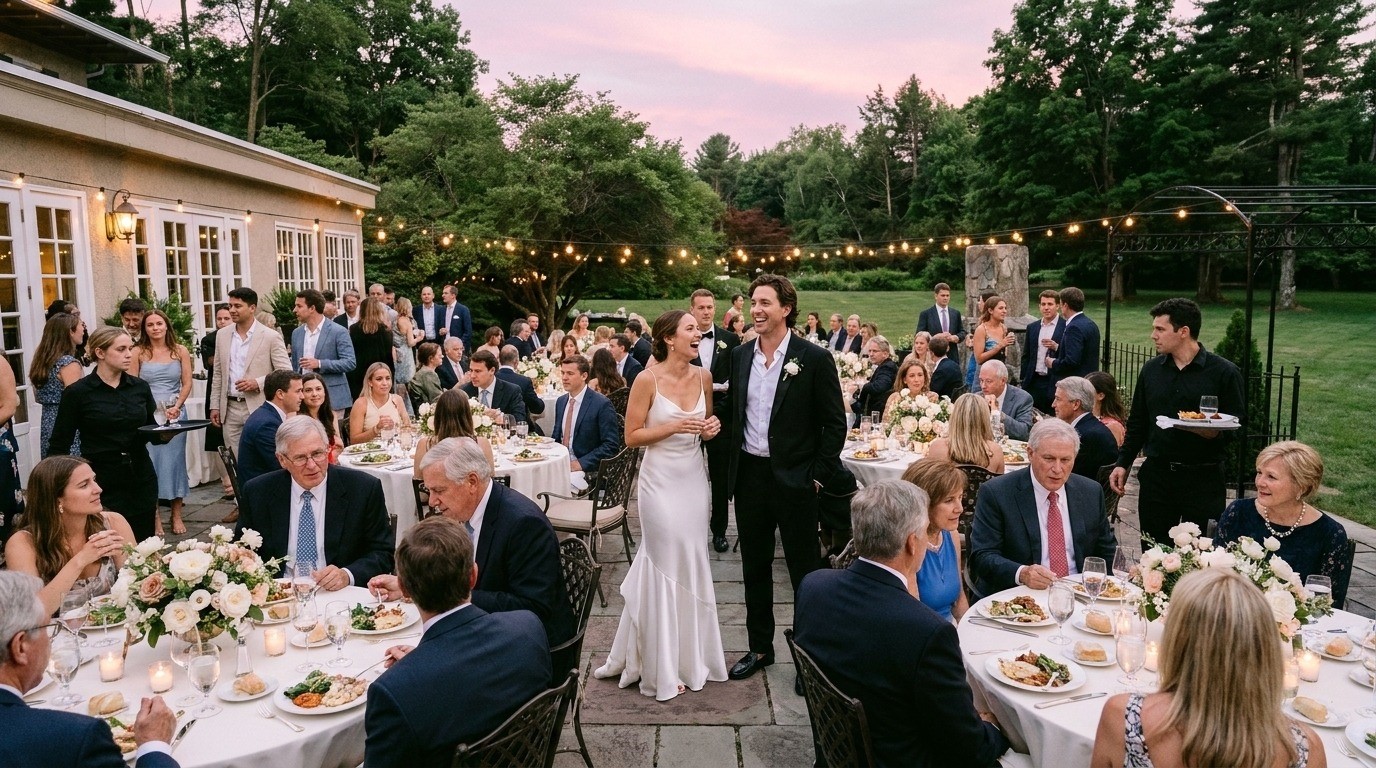
Forty acres of Olmsted-designed grounds, a James Beard-recognized kitchen, and a weekend takeover model that turns your wedding into a private estate retreat.
Lord Thompson Manor doesn’t do Saturday-afternoon-and-out weddings. The entire model is built around the weekend: your guests arrive Friday, settle into the manor or the adjacent Cottage House, and the celebration unfolds across two or three days. Built in 1917 as a summer home for John R. Gladding, the estate was later landscaped by the Olmsted Brothers—the same firm behind Central Park and the grounds of the U.S. Capitol. You can feel that pedigree in the Sunken Garden, which has the kind of deliberate, layered beauty that only comes from designers who thought in decades, not seasons.
The interior runs through distinct rooms, and the owners have leaned into that. They call it the “Party Flow”—toasts on the balcony, dinner in the dining rooms, dancing in the conservatory. Each transition moves guests into a new environment with a different energy. It’s not a gimmick. It’s how these houses were designed to entertain, and when you work with the architecture instead of fighting it, the evening has a natural rhythm that keeps people on their feet.
And the food deserves its own paragraph. The in-house chefs hold James Beard Foundation Celebrated Chef status, which is not a credential you encounter often at wedding venues. The Silverstone family, who currently own the manor, have built a reputation around culinary experiences that rival destination restaurants. The on-site KISS Spa is the quiet luxury detail—available to guests staying on the property, and yes, your bridal party will use it.
Capacity: Up to 220 seated Spaces: Garden Terrace, Conservatory, Sunken Garden, multiple dining rooms, balcony Price Range: 125-person weekend averages $22,300–$30,000; facility fee ~$4,750; catering ~$110/pp; alcohol ~$37/pp Peak Season: May–October (full use of the Sunken Garden and outdoor spaces) Best For: Food-obsessed couples who want a multi-day estate experience Pet-Friendly: Conditional—private estate, contact owners for specific requests (often flexible for ceremonies)
The “Party Flow” model is a performer’s dream if you plan for it—and a mess if you don’t. Each room has different dimensions, different ceiling heights, different acoustic properties. The conservatory, where most dancing happens, has glass walls and a moderate ceiling that create a bright, contained sound—great for energy. But the transition from dinner means you need to rebuild momentum when guests physically relocate. The trick is to have music already playing in the conservatory before they arrive—let the sound draw them in. With the entire property exclusively yours and a cap around 220, your entertainment needs to fill a living room with your closest people. That’s a different skill than commanding a ballroom, and honestly, a more demanding one.
Having the Olmsted Brothers involved elevates this property from “nice estate” to historically significant landscape. Frederick Law Olmsted Jr. and John Charles Olmsted designed grounds for the White House, the National Mall, and some of the most important public parks in America. Their Sunken Garden at Lord Thompson reflects the same philosophy: create spaces that feel inevitable, as if the land chose that arrangement. In the 1930s, the manor served as a Marian Fathers monastery and novitiate—an unexpected spiritual layer for a building that now hosts celebrations.
Official website: https://www.lordthompsonmanor.com/
Burr Mansion (Fairfield)
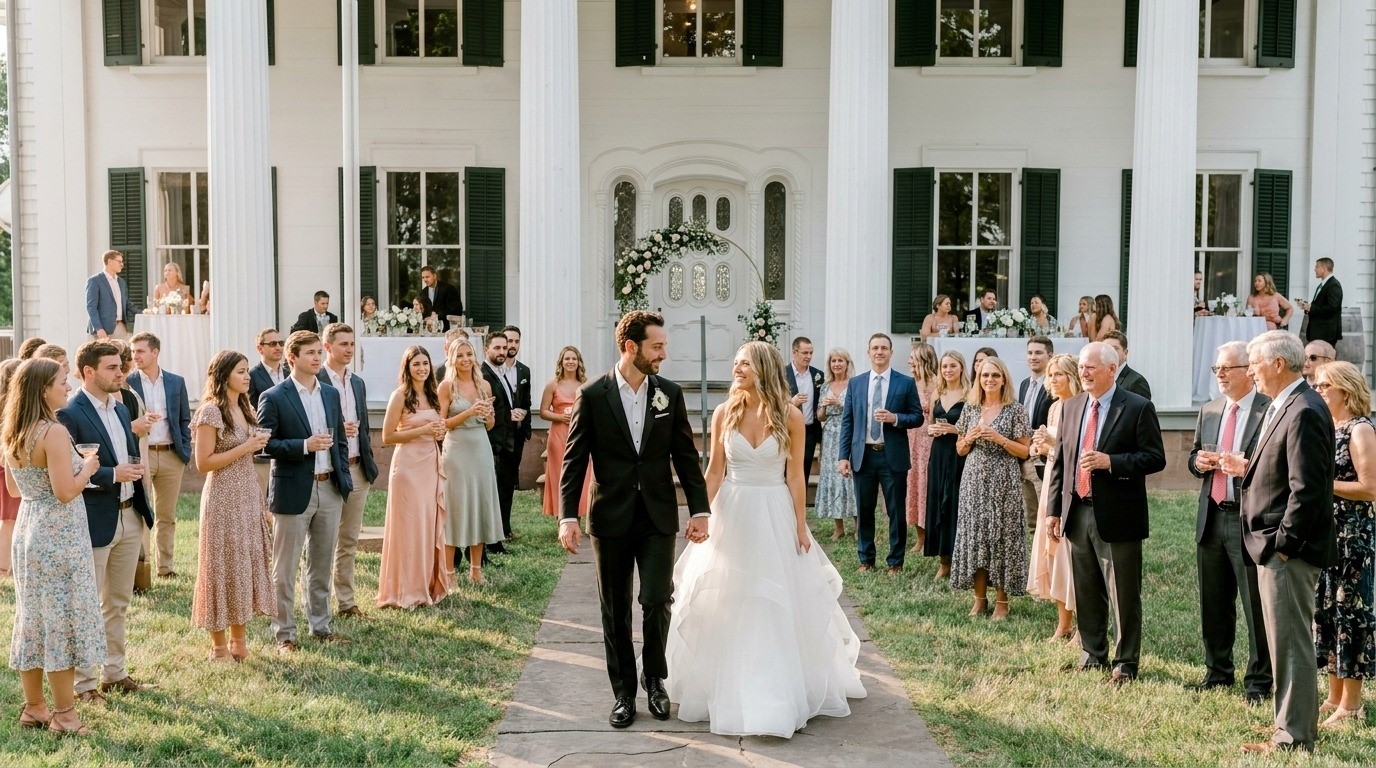
John Hancock got married here in 1775. George Washington and John Adams were guests. That’s not a marketing embellishment—it’s a documented historical fact.
The Burr Mansion sits on 4 acres in Fairfield with a weight of history that most venues can only dream about. The original 1732 structure was burned by the British during the 1779 raid on Fairfield—one of the most destructive acts of the Revolutionary War in Connecticut. When it was rebuilt in 1790, Hancock himself offered to provide the timber and glass, and the new structure was designed as a replica of his Boston mansion. Federal and Greek Revival details remain throughout, and the 15 separate event rooms give the building a maze-like quality that rewards exploration.
Beyond the history, Burr Mansion runs on an open vendor model you almost never see at estate-level properties. You bring your own everything. Full caterer’s kitchen, renovated in 2019. BYOB allowed. Your choice of florist, DJ, band, photographer. For couples who want creative control (or who want to save thousands on alcohol by buying it wholesale), this flexibility is significant. The outdoor tent accommodates 200-plus guests when the weather cooperates; the indoor spaces max out around 95 seated, which gives the mansion an intimate, house-party feel.
The town of Fairfield owns the property, which keeps rental fees remarkably reasonable compared to privately operated estates. A furnished bridal suite on the second floor provides a quiet retreat, and parking happens at the adjacent Town Hall. It’s not a full-service luxury venue. It’s an extraordinary historic building that hands you the keys and lets you build the wedding you actually want.
Capacity: Indoor (95 seated), outdoor tent (200+ seated); 15 event rooms in the mansion Spaces: Indoor parlors and event rooms, outdoor tent, manicured gardens, bridal suite Price Range: Rental fee $2,000–$5,000 (8-hour block); tent fee ~$2,800; $1,500 security deposit Peak Season: May–October (when the 200-guest garden tent is available) Best For: History lovers and DIY planners who want full vendor freedom Pet-Friendly: Conditional—dogs permitted for outdoor ceremonies and garden photos
With no house sound system to fall back on, your entertainment choice matters more here than at an all-inclusive estate. You’re bringing everything. The indoor spaces max at 95 seated across small, segmented rooms, and intimate means every sonic detail is magnified. Live acoustic instruments—guitar, violin, a vocalist—breathe in these rooms. A full PA cranked to standard wedding volume will overwhelm them. The outdoor tent is a different calculation: open sides, ambient noise, no walls to contain energy. You need directional speakers and a performer who can read the crowd without the room doing the work.
The Revolutionary War connection at Burr Mansion isn’t decoration—it’s the building’s identity. John Hancock and Dorothy Quincy’s 1775 wedding here is a documented event, with Washington and Adams in attendance. When the British burned Fairfield four years later, the original structure was lost entirely. The rebuilt mansion carries a local legend about a “spirit of liberty” that draws historical reenactors and families with deep New England roots. Getting married in the same building where a Founding Father said his vows adds a layer of significance that no amount of venue styling can replicate.
Official website: https://www.fairfieldrecreation.com/burr_mansion.php
Wadsworth Mansion at Long Hill Estate (Middletown)
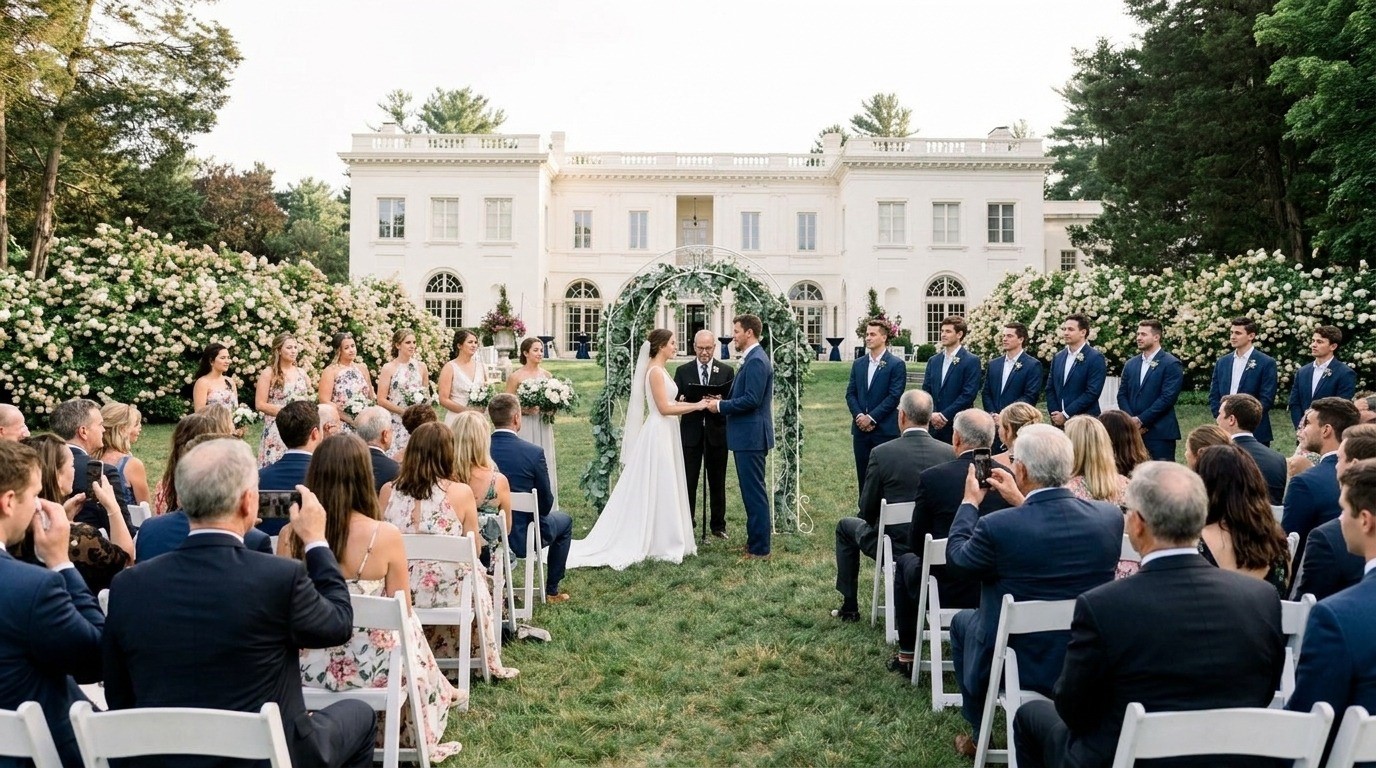
A 103-acre Beaux-Arts estate designed by the same architects who built Edith Wharton’s home—and a 700-foot ceremony lawn that functions as the longest aisle you’ve ever seen.
You drive through 103 acres of wooded estate before the mansion appears—Neoclassical columns, a loggia with arched openings, marble fireplaces visible through tall windows. Hoppin & Koen designed it between 1908 and 1911 for Colonel Clarence S. Wadsworth, a conservationist who eventually gifted the property to the public. Those same architects designed The Mount, Edith Wharton’s famous home in Lenox, Massachusetts—a literary and artistic pedigree that architecture buffs immediately recognize.
But the 700-foot Vista is what stops every conversation. It’s a manicured lawn that stretches from the mansion’s rear loggia straight out toward a tree-lined horizon—wider and longer than a football field, framed by wilderness on both sides. Couples use it as a ceremony aisle, and the visual effect is extraordinary: guests seated along this expanse, the wedding party approaching from what feels like a quarter mile away, the mansion rising behind the officiant. As a performer, I can tell you that the emotional build during a processional that long is completely different from walking 30 feet down a hotel ballroom.
Inside, the mansion holds 200 seated with marble fireplaces, original millwork, and proportions generous enough to make even a mid-sized wedding feel grand. The approved caterer model gives you more flexibility than a fully exclusive kitchen, though outside caterers pay a $1,000 fee. Wadsworth Mansion runs one event per day across a 9-hour rental period, so the entire estate is yours.
Capacity: 200 seated indoors; 275+ for cocktail events or tented patio receptions Spaces: Grand interior rooms, loggia, 700-foot Vista lawn, tented patio, 103-acre grounds Price Range: Peak venue fee $6,000–$7,000; all-in spend typically $45,000–$65,000; NYE fee $10,000 Peak Season: May–October (the 700-foot Vista at its most dramatic) Best For: Couples who want Gilded Age architecture on a Newport-level estate Pet-Friendly: Yes—for ceremonies and outdoor portions of the day
The loggia is one of the most interesting performance spaces in Connecticut. It’s a semi-outdoor room—arched openings on one side, the mansion’s stone wall on the other—which creates a natural acoustic environment that splits the difference between indoor resonance and open-air clarity. Live instruments sound warm without the echo you get in a fully enclosed stone room. For the Vista ceremony, you’re working with open-air acoustics across 700 feet, which means your ceremony sound system needs to project without a single wall to help. Wireless microphones are non-negotiable, and speaker placement along the aisle’s length (not just at the altar) keeps the officiant audible for guests in the back rows. The transition from outdoor ceremony to indoor reception requires a clear plan—the walk from the Vista to the mansion takes a few minutes, and your cocktail music should already be playing when guests arrive inside. One event per day means your load-in and sound check can happen without rushing, which is a luxury that venues with back-to-back bookings can’t offer.
A $5.8 million restoration in 1999 saved a building that had spent decades as a convent for the Religious of Our Lady of the Cenacle. Colonel Wadsworth eventually donated the property to ensure it would remain public—he was an early advocate for land preservation in Connecticut. The architectural connection to Edith Wharton’s The Mount is more than trivia; Hoppin & Koen brought the same Beaux-Arts principles to both buildings, and visitors who’ve been to Lenox will notice echoes in the proportions, the loggia design, and the relationship between house and grounds.
Official website: https://www.wadsworthmansion.com/
How to Choose Between These Venues
Couples planning a multi-day celebration—Friday welcome dinner, Saturday wedding, Sunday brunch—should start with Lord Thompson Manor, which was built for exactly that. Thirteen guest rooms on-site, an Olmsted-designed estate, and a culinary team with James Beard credentials make it a destination weekend, not just an event. The intimate cap of 220 guests keeps it personal.
When the architecture itself is the point—when you want your guests gasping as they walk in—The Society Room’s gold-leaf ceilings and Wadsworth Mansion’s 700-foot Vista deliver that reaction through entirely different means but with equal force. One is urban drama; the other is pastoral grandeur.
For out-of-town guests flying in, airport proximity matters. Hartford venues are closest to Bradley International. Fairfield County (Burr Mansion) works best with Westchester County Airport or the New York airports. Lord Thompson Manor in eastern Connecticut is actually closest to Providence’s T.F. Green.
And if the historical story matters as much as the physical space, Burr Mansion’s Revolutionary War pedigree—a documented Hancock wedding in 1775—is simply impossible to match.
Why Entertainment Matters More Than You Think at Historic Mansions
High ceilings are the main variable. The Society Room’s 35-foot gold-leaf ceiling creates a natural reverb that flatters live instruments—a saxophone solo in that room has a warmth and depth you won’t get in a standard event space. But that same reverb smears a bass-heavy DJ mix into an indistinguishable wall of sound. The room rewards you when you work with its properties and punishes you when you don’t. Saint Clements Castle, built from granite, has similar resonance characteristics. Lord Thompson Manor’s conservatory, with its glass walls and moderate ceiling, is a completely different acoustic environment—bright and contained, great for building dance floor energy.
Flow is the other variable. These aren’t hotel ballrooms where everything happens in one room. Historic estates move guests through spaces—gardens to terraces to dining rooms to ballrooms. That means your entertainment can’t stay static. You need musicians who can perform in a garden during cocktails, transition to a ballroom for dinner, and shift energy again when the dancing starts. Each room change is a potential momentum killer if the music doesn’t bridge the gap. It’s also an opportunity—when the entertainment leads that transition intentionally, each new space feels like a reveal.
Equipment protection is a bigger deal here than at modern venues. Original hardwood floors, marble thresholds, plaster walls—these buildings have preservation requirements. Your entertainment team needs to know how to protect surfaces during load-in, run cables without damaging century-old millwork, and set up without leaving a trace. It sounds minor until you’re the couple getting an invoice for floor refinishing because a speaker stand scratched a 200-year-old board.
Why DLE Event Group
We bring backup equipment to every event. Duplicates of everything critical. At a venue where the architecture is irreplaceable and the evening has no do-over, redundancy is standard operating procedure. Our team arrives with a plan for that specific room—speaker placement, stage positioning, cable routing that protects historic surfaces—because we’ve spent over a decade learning what these spaces require.
DLE Event Group has performed at 100+ weddings and events across New York City’s most prestigious venues—The Plaza Hotel, The Pierre, Gotham Hall, Guastavino’s—and throughout the tri-state area. We’ve earned The Knot Best of Weddings Hall of Fame 11 consecutive times. Our planning process starts with 5 to 10 Zoom sessions approximately six months before your wedding, covering your music, your timeline, and your venue’s specific requirements. We learn custom songs for first dances and coordinate pronunciation guides for MC introductions. Connecticut is well within our service area, and we bring the same specificity to every estate here that we bring to a Plaza Hotel ballroom.
Let’s discuss our packages, with configurations ranging from a DJ-led hybrid with two to seven live musicians up to our Celebrity Hybrid DJ Band for full-scale production.
Frequently Asked Questions
Ready to Plan Your Connecticut Mansion Wedding?
The venue sets the tone—but the entertainment is what brings the room to life.
DLE Event Group specializes in making historic spaces feel electric. If you’re exploring any of these Connecticut venues for the 2025–2026 wedding season, we’d like to hear about what you’re planning.
QUESTIONNAIRE
Need Assistance? Directly reach us at contact@dleeventgroup.com or 877.534.2424